
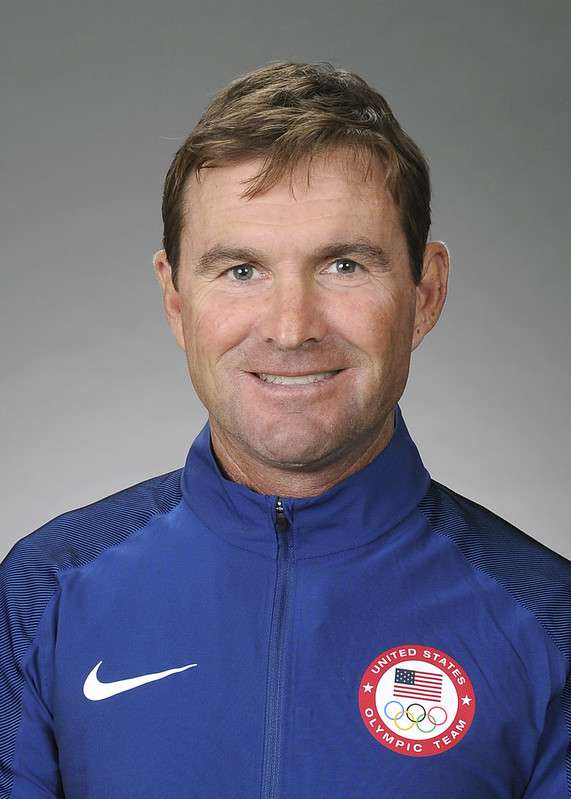
It’s always a thrill for us when we share a story about an Olympian and then they come on the show. A few weeks ago, we talked about the 1996 Australian eventing team’s performance at the Atlanta Olympics. Now we have one of those team members on the show! 6x Olympian Phillip Dutton joins us to tells us about how equestrian eventing works and the partnership between athlete and horse.
Follow Phillip on Facebook and Insta.
We’re also still taking in the news from Tokyo 2020: No overseas fans welcome at this summer’s Olympics. TKFLASTANI Ken Hanscom joins us to talk about the ticketing situation and what fans are feeling now that they can’t go to the Games.
What are our TKFLASTANIs up to this week? We’ve got news from:
- Tony Azevedo
- Clare Egan
- Josh Williamson
- Lauren Gibbs
- David Davis – read his latest article here.
We also have Games Updates from Tokyo 2020, in that the organizing committee has to deal with another insensitive gaff, but maybe people will forget about it now that the Torch Relay has started!
Plus, we have big news for us about the Beijing 2022 Winter Olympics!
Thanks so much for listening, and until next time, keep the flame alive!
Photo: Courtesy of Team USA
TRANSCRIPT
Note: This is an uncorrected machine-generated transcript and may contain errors. Please check its accuracy against the audio. Do not quote from the transcript; use the audio as the record of note.
181-Olympian Phillip Dutton on Eventing and Ken Hanscom on the Tokyo 2022 Ticket Situation
Phillip Dutton: Especially on the cross country, some of the jumps are massive jumps and, uh, require, you know, total belief in what the rider is asking them to do. And, uh, so it is, it’s a pretty cool sport.
Theme Music
Jill Jaracz: Hello fans of Shook Stan, and welcome to another episode of Keep the Flame Alive, the podcast for fans of the Olympics and Paralympics.
I am your host, Jill Jaracz, joined as always by my lovely co-host, Alison Brown. Alison, hello, how are you?
Alison Brown: I’m a little overwhelmed. It’s been a week.
Jill Jaracz: It has been a week. Oh my goodness. So, oh, we’ll get into it in a minute, but it has definitely been a week for news about the Olympics and Paralympics. But first, we would like to give a special shout out to our patrons you next bonus mini episode, we’ll celebrate Mascot Madness.
You can become a patron of the show at the bronze, silver, and gold medal levels. And there’s also a very special Stan Committee member level benefits include a bonus mini episode every month submitting. Ask me anything questions to the show, even commissioning the main segment of a future episode. Make your shuk ani citizenship official at patreon.com/flame Alive pod.
Alison Brown: And just as a quick teaser, if you think your NCAA brackets got busted. You will feel so much better when you hear what happens to me.
Jill Jaracz: It was, and our Masco madness. It was, it was pretty epic, I have to say. I was very surprised. But, uh, it’s gonna be a great competition. We are looking forward to it.
Tokyo 2020 News: No fans at the Olympics
All right. We are kicking things off with Tokyo 2020 News, because we got the word no overseas fans at this year’s Olympics, which is a bummer. I, you know, I went to bed very, very late on Friday and before I went to bed, I checked the news. I was looking at Kyoto News and they said, no, overseas volunteers would be let in, but they didn’t have the word yet.
And like, oh, if they’re not gonna let in volunteers, they’re definitely not letting in people who have nothing to offer, but they’re cheering and their wallets, you know,
Alison Brown: to be fair that that’s quite an offering. Oh, well, that’s true. That’s true. But, but yeah, it’s, it’s. Not surprising and yet to hear it officially is a whole other level.
Jill Jaracz: Exactly. So to get some perspective on this, we talked with our Ani Ken Hanscomb. Ken is the COO of ticket manager and a trustee of the U-S-O-P-C Foundation. He has been our go-to for Olympics travel, so we touch base with him. When we heard the news about Tokyo take a listen. Tokyo no overseas. Were you surprised?
Ken Hanscom: I was not surprised. You know when we first heard about the cancellations. Back in February and immediately someone came out and said, no, no, that’s absolutely not true. We’re still having it. And when this was kind of floated out in the media and I think Kyoto, uh, news about two and a half weeks ago, and there was not quite the same level of, uh, people refuting that it would, uh, was going to happen.
Uh, I think from my perspective it was kind of a foregone conclusion that that would be, uh, the ultimate result. And specifically with the timing, with the, you know, the torch relay starting this Thursday. And I think, you know, some of those decisions, you know, needed to, you know, one, I think it was desire to have a lot of those decisions made before that particular relay started, which I think put the time pressure on in terms of that.
So, no, I, I, I wa I was, it was largely when I went to bed on, on Friday night, um, after hearing, um, that they were gonna be talking about, I expected to wake up to, to the news. And although many people still held out quite a bit of, you know, some hope, you know, when I woke up in the morning, I was not surprised and in any way.
Alison Brown: Well, it’s a bummer of the, the big news was that they’re still going to allow some foreign volunteers.
Ken Hanscom: Yeah. I think that came out on either late Saturday or early Sunday that in effect ones that have very specialized skillsets and, you know, maybe think about certain languages or whatnot. I don’t wanna speculate what that would be, but if some languages are not, um, as readily available from, from translation purposes in Japan, you, you could see why, you know, in order, in terms of execution of the games and making sure that, you know, athletes and others have, you know, can be comfortable, you know, despite the circumstances.
You can, you can see why some of those accommodations would be made just to serve the athletes.
Jill Jaracz: So for people who were hoping to go,
Ken Hanscom: yeah.
Jill Jaracz: Now what happens for them? Let’s start with tickets first.
Ken Hanscom: Yeah, I, I mean, we don’t know yet. I, I think, you know, I, I could speculate on what the process would be based on what happened last summer, but, you know, we just have the information.
I think the authorized ticket resellers are just starting to get some of the information. And then I expect over the coming days, uh, that we’ll get some more specific details coming out of, uh, a combination of Tokyo, uh, as well as from the authorized ticket resellers on, on what the process could and, and would be.
I mean, I know in, in some of the groups I, I’m in, people are asking, well, if I have friends in uh, Tokyo, can I just give them my tickets? Can? And so there’s probably a lot of things being considered and I don’t wanna speculate what, what, what those specific items are. The simple thing is, is we don’t know, but the fact that they’ve said that, you know, people, you know, that the tickets will, will be refunded.
Alison Brown: So who’s making that ultimate decision? Is that coming from the organizing committee or the individual sellers?
Ken Hanscom: You know, I think ultimately it’s a very complex situation that goes back to 2013 and there’s differences between tickets and hotels and hospitalities and whatnot. I think ultimately it’s gonna be a combination of, of the five parties that made the original decision, right?
Uh, Tokyo Metro, Japanese government, Tokyo, you know, Toco, IOC and IPC. ’cause you also, you have, you know, it’s not just Olympic ticket sales, you also have the Paralympic ticket sales. Uh, they have to be considered. So, so I think ultimately a lot of the decisions are gonna start from there. And of course, you know, the authorized resellers are, are extensions of their National Olympic committees that, you know, each of them has a contract with a combination of Tokyo 2020 and that.
So, you know, it’s, it’s, it’s, it’s gonna be a partnership between all parties involved to do the right thing.
Jill Jaracz: Just I, I think. Some people might be thinking immediately, well, I, I want my stuff back now, but we should, we should really talk about months and months of we, I may maybe, I
Ken Hanscom: mean, that, that’s, that’s, that’s speculation, you know, and again, I’ve, I’ve, I’ve seen and talked with people that say, Hey, yes, you know, I want my, my money back tomorrow.
Which I, I, I do understand that, you know, we also went through all of this last summer. With concerts, with sports, with theater events. And so now this is at least here, the United States and Europe and other places, there’s kind of an expected kind of process that, that you go through. And so whether it’s gonna be, you know, I, I guess I don’t expect today to get it back into, you know, two weeks, but whether that’s 36, I think we still need to wait for more information to come out.
I know some of the ATRs did publish guidance even before the announcement was made around timing. And I think, you know, ultimately depends on what the, you know, four to five, you know, the different parties work together in terms of finding that solution is. So, I wouldn’t say, Hey, it’s definitely gonna be.
I think one of the, one of the letters said 60 to 90 days after the event. Uh, and other people have said, Hey, it needs to happen much sooner. I think, you know, we’ll find, it’ll be somewhere in between, but I don’t, I, I don’t think we know yet what that’s gonna be, because again, just like with everything else, the authorized resellers buy the tickets in advance from the Tokyo Olympic Committee, right?
And so that money, that money needs to flow back in order to, to, you know, for those things to happen.
Alison Brown: They have not announced yet what the domestic audiences num those numbers will be for each event.
Ken Hanscom: Uh, they, they will be, uh, you know, and that being said, you know, if you can look and look at tea leaves out there, right?
For example, there’s, there’s event, there’s two wrestling events that are gonna be at Yokohama Stadium in May that are already 50, uh, 50% plus capacity for those. So they’re gonna have 34,000 spectators there. And, and so I think, you know, guidance wise, I think people are expecting of, what I would just personally expect it from experience is, you know, at least 50%.
Uh, and maybe it goes higher depending on, you know, what the virus does and what the state of things are in Japan. Uh, over the subsequent, you know, two months be before they begin. And first, you know, of course, first and foremost, right? You have to look at the protection of the athletes so they can have, be successful in competitions without being disrupted, uh, as well as all the supporting staff, the trainers, the coaches, the people that are making sure that, that the athletes are having a safe time.
So I think it’s gonna be guided by, by both of those items. And again, I think most of us don’t. I mean, in the US I think we feel a lot differently. That’s been one of the most interesting things for me is, uh, reading a lot of the comments and conversations and even messages I directly get in the us I would say people are probably the most surprised, shocked.
And I think part of that is, is because as we’ve seen what President Biden HA has done and in terms of the rate and acceleration of, of vaccination that we’ve seen here in the United States, and most of us looking and say, Hey, if I wanna be vaccinated, I can be vaccinated before the end of June. But that’s not in a lot of other countries.
And when you think about something like the Olympics, it’s, it’s, it’s, it’s not about the us. I mean, we oftentimes, I mean, I do wear team USA stuff all the time, and for me it’s obviously about supporting the, the team, USA Olympic athletes, uh, but in another place that’s not, people in Australia are like, oh yeah, this was totally a foregone conclusion.
How, how could it, other people are like, how could, have they accepted international spectators? Places like Australia and New Zealand, where in some ca, you know, some PLA cases, they’re not even able to leave the country right now in terms of the, the restrictions that they have there. Now, things might be, you know, less cases of the vi, you know, of coronavirus than we see here.
But still, but still, even in those cases, they have much more severe restrictions than, than we may be experiencing right now. And so, so for some of them there’s like, yeah, I have to, I had no expectation that there was any case where this was possible.
Alison Brown: So what are we hearing at this point about Beijing and tickets for next?
I mean, that’s now less than a year away, and in normal circumstances, tickets would be on sale.
Ken Hanscom: Yeah. You know, I, this is another one of those areas where you get, get exp speculation. I don’t know the timeframe in terms of, of when they’re planning to do that. And there’s probably nu uh, a number of things that are in play.
One is what is the situation in China, but the other is, is, you know, how careful do you have to be with a summer games coming, the promotional, the excitement around that. I’m not taking away from that. And at the same time, making sure that, you know, you are moving forward in terms of what’s gonna happen with Beijing.
So I, I don’t know, I don’t have any particular, uh, notes. I mean, even the group of people that are kind of organized around Beijing is, is a lot smaller right now, uh, than even Pyeongchang. Uh, you know, Pyeongchang was, and I think there’s a number of different reasons for that. Like a, a lot of people made plans for Tokyo before we even knew what COVID-19 was.
So I think some people who are now are thinking that advance, they’re just thinking about, Hey, can I go somewhere, at least in the us can we go somewhere this week that this, you know, this month, this quarter, this next six months. And so I think as we get closer, I think as we get to summer, I think we’ll have a little bit better sense of where things are.
But there’s no official announcements or on sale dates or anything at the, at those points in time. And I think from my, my, my look around the, the hotels themselves, like even in, in greater Beijing, it’s, you know, they’re, they’re not cheap, right? They’re, they’re four or $500 a night, uh, maybe 600 a night for a really, you know, for a pretty, you know, four or five star hotel.
So there is some level of availability for me, I think Beijing is, is inter, is pretty attractive because you can stay in the city. Uh, of Beijing, uh, where you don’t have really, let’s call it a lack of accommodation. Maybe we’ve seen in, in the last couple, uh, of Winter Olympics, and you can commute up to the mountain while also having things there, you know, like, like, you know, figure skating and hockey and those things that are gonna be down in the city.
So, to me it’s, it’s really, it really interesting from, from an experience standpoint, where I think it was kind of difficult to get from Seoul out there, you know, to bong like even and do a day trip. It seems like it could be easier, um, with the way the rails and situations are gonna be set up in Beijing if we get to that point.
Alison Brown: Oh, I just, I’m so sad. Yeah. I mean, I wasn’t even going and I’m sad.
Ken Hanscom: Yeah, I mean, it’s, it’s really sad. I mean, I’m, I’m completely sad, but I mean, when I think about it, what I’m most sad is for the athletes. And they’re not gonna be able to have their families, they’re not gonna be able to have their loved ones.
You know, the, those, those are the first and foremost things that I kind of think about is like, what is the impact on, on athletes? And they’ve been through a lot the last year, right? First all getting geared up, right? It was this time last year. They’re all getting geared, like if you look at their training plans just to peak in time for a lot of the qualification events.
And then there, and now they’re looking at doing that again after having a lot of isolation the past year. And looking at the prospect of actually now going to Tokyo to being in a potentially isolation, of course with, with their other, but not with their families and friends and them cheering in in stands.
And that’s the other thing I think about is effectively every single event is gonna be an away game for non Japan athletes. And so the hope is that they can leverage that for motivation, right? Because you can think about certain events and certain moments there where it can be the team, USA soccer team.
Versus Japan in the final and the stadium’s full of Japanese fans with, with very few, if any American fans able to support them. You can think about the women’s tennis finals with, uh, Naomi Osaka. Right. And specifically what that would be like. And you can, so you can kind of walk through all those. The, you know, the men’s baseball final at Yokohama Stadium, Japan obviously is, its favored to make it there.
Team USA hasn’t even made it, and I’m putting these all in US context, but each event, each athlete from a, from somewhere else is potentially, you know, looking at, at, at, facing that even at a 50 or 25%, you know, capacity with it, with it being, being local. So I really, my heart, and I think as I think about things is what, you know, what I think about more than anything is the athletes more than anyone.
Again, I’m disappointed. I’m, you know, looking forward to going, of course we’ll be going to Beijing and well. So you assuming of Beijing comparison and beyond. But I think about, I think about the athletes, I think about their families. I think about the parents of athletes. Um, that’s probably who I’ve gotten the most, you know, contact from.
The other thing is, you know, there, there’s people that don’t go to every Olympics like I do. Uh, 1, 1, 1 person wrote, reached out to me on social media and just said, Hey Ken, you, it’s been really helpful to helping me prepare over the last couple years. I want you to know my story. And story was this is, he’d always, uh, when he was a kid, he had had a dream about going eighth Olympics and B to Tokyo.
And from the day that Tokyo was announced in 2013, save $25 a week to put aside so that when Tokyo 2020 would get here, that he would have the means to go to participate, to tour Tokyo and Japan as, as well as see the Olympic games and that kind of stuff is, is real, is is really, really. Heartbreaking about the sacrifice and the planning that a lot of people put in place, uh, for once.
And you know, what they perceive as a once time, once in a lifetime moment, I hope they’re like me. And they would go once and say, you know, I’ve gotta do more of that. Right? I’ve got, I really need, I really wanna do more of that and participate that. But th those are, those are the things that, that I really.
I think just really get to me in terms, in terms of my heart and what I’m thinking. And again, I’m not, I don’t second, uh, guess the Japanese government or, or the decisions here. Like I’m not epidemiologist. I, I have no idea what state of the world’s gonna be like in June or July. Yeah. My world of worlds would, I’ve liked there to be a vaccination passport where I’m green or red, or even, even if it’s very restrictive.
But I’d love to do that at the same time. How do you let a million people into a country, which was the, you know, the impacted people at this point where we know things and there’s other things I could speculate on in terms of my experience with operating, uh, large events and being part of those for last 15 years about timeframes for decisions.
But I don’t think anyone right now can, can, can really look at it’s second guess. And I think people are gonna get to June or July and things are either gonna be better than expected or possibly worse than expected. And we’re gonna see it in, in the media, oh, did Japan make the decision too soon? And then, you know, hindsight’s 2020.
But when we stand here looking at things now. I think the level of concern there in Japan, I mean, I, I don’t know what other option was really there, so I, I think kinda have to be supported as disappointed, you know, as I am. I was looking for, you know, looking forward to being in Japan for a month. Come, come mid-July, all the way through August.
Singer: Yeah. It’s, it’s sad. Yeah. I don’t need to laugh. It is,
Ken Hanscom: but I think that what we have to look at is how can we best support the athletes going there and that, that’s what, what I. I’m concerned about the most, about finding ways to do that and when, you know, when they’re also there in the ground and they have the moments.
And I know that, you know, one of the reasons, the reason my wife and I, we support the U-S-O-P-C, either way we do, is that a, just have a fantastic system and tools and trainers and others to help people visualize and think through these situations. So with, when they get there, they’ll be prepared. And I know that all the work that happens there is gonna help prepare them for that, but it’s just gonna be, you know, that much more motivation.
They’re gonna need to, you know, need to figure out in a lot of these cases where away from home, away from family, and then even in the events, um, where you’re used to seeing maybe a multinational crowd, depending on who you’re facing in a given event or a given session or whatever, you may, you know, ha have, you know, it’s gonna be an away game.
It just, it just effectively, it’s gonna be a away game.
Jill Jaracz: Have you heard anything through the U-S-O-P-C of things that they might do to try to make it more special for the athletes that their families can’t come?
Ken Hanscom: Yeah, so I, I, I don’t have any specific details in terms of that. I just know that, you know, once my, I’m gonna say specifically my personal concern is, is finding ways that, um, we can either help or, or whether it ends up being messages or encouragement or any of those kinds of things to do, to do that.
And I’m sure the SOPC is gonna, you know, continue to do everything. You know, Sarah, Sarah had a great, you know, I think letter over the weekend in terms of, of the announcement in terms of that, that focus and support that, that, that we need to have for the athletes. I’m sure we’re gonna see a lot of creative, both opportunities and ways to, to encourage our athlete.
I mean, our, the US team has just been fantastic about that. Uh, the various ifs, you know, over the past. And, and, and I think as we move into, uh, we also have a lot of qualifying coming up. You know, there’s qualifications. Uh, they just started again for soccer, uh, baseball tournaments in July. You know, the men, the men had a great victory over Costa Rica for I think four to one, four to zero last week to just, you know, because they haven’t qualified yet.
We have the gymnastics, we have swimming, we have all that stuff coming up in the next couple months. And I’m sure there’s gonna be some very unique opportunities to support them one way or another, whether it’s financially and emotionally. Um, and so, and some of the other ways that I’m sure that everyone will come up to do that.
I’m sure sponsors are also gonna be looking for ways to also, to, to help out too. So how are you guys feeling about, about, I mean, were you guys surprised?
Jill Jaracz: Surprised? No.
Ken Hanscom: Yeah, not
Jill Jaracz: surprised at this point. Disappointed. And now it’s like, well, don’t know what’s gonna happen. I, I want those ticket, I want the ticket money back.
Of course, at some point. Yeah. But
Ken Hanscom: we all do.
Jill Jaracz: I, I feel worse for the families. And it would be nice, like if, you know, you kind of hope that, oh, maybe June is better and there’s a better climate, and they go, okay, we can let families in. And put you on a list or something, but I don’t know.
Alison Brown: Hang in there Ken.
It’s probably gonna be, yeah, no, a couple weeks.
Ken Hanscom: It is. I mean, it, it’s gonna be Acra crazy few months and you know, I think start looking forward towards Beijing, we’ll start forward towards, towards Paris and, you know, we’ll, we’ll we’ll see, we’ll see what also what happens with Tokyo and all, all, all the athletes and obviously saying that them are, are loving and are well wishes so that they can continue kind of training and you know, looking forward to, you know, getting over there to Tokyo and having a very, very successful summer games for team USA.
Jill Jaracz: Yeah. Excellent. Thank you so much Ken. So yeah, no fans from outside of Japan. There were about a million tickets sold to overseas fans, but that doesn’t necessarily mean a million fans were planning to come in. Because we had a book before, right? Because you
Alison Brown: yourself had, you know,
Jill Jaracz: about a half a million tickets, at least
Alison Brown: 10,000 of those.
Jill Jaracz: But Toshiro Muto, the chief executive of Tokyo 2020, has promised that ticket holders would receive refunds. But the big concern for ATRs as, uh, inside the games reported that, uh. Most of those tickets that they sell come through packages. And Tokyo 2020 is currently claiming that only 30% of total hotel room nights can be released free of charge.
And the hotels are already saying they don’t have any intention of returning money that was paid in advance, which although these packages are paid in advance and other hotels are offering to make just partial refunds, so then that means that the authorized ticket resellers could get millions of dollars in compensation claims and they are fearing bankruptcy.
It’s gonna
Alison Brown: be, this is gonna be months
Jill Jaracz: exactly. To get this
Alison Brown: all sorted out. I mean, the straight tickets, you know, if you just have tickets.
Jill Jaracz: Mm-hmm.
Alison Brown: Was there fees and things associated with buying the tickets, though? Of course, that’s how they, so, you know, so are those gonna be refunded?
Jill Jaracz: I doubt it. I, I, I highly doubt because they have to get some of their money back somehow and they’ve spent.
The time and the technology to get the money transferred over to Tokyo 2020. So there’s money to be spent for that technology that they have in place for that. And
Alison Brown: this is, this is gonna be a long time getting sorted out. Mm-hmm. Mm-hmm. So you may get your straight ticket refund.
Jill Jaracz: Right. Or they may even take a percentage off of that.
I would not be surprised if they took a little bit off the top for the work that they have to do in the background. But it’s, it’s tough. It’s uh, you know, just like getting money back is pretty important for most people. It’s,
Alison Brown: yeah, just kind of, even though we’ve gotten the official word, this is hardly sorted out.
Jill Jaracz: Right. So if you’ve got tickets, let us know when you get word of what’s happening with your ticket refund or when you get money back. ’cause we’d like to know how long it actually takes different people. And I, I wonder if people who get packages. Are first in line to get their refunds or last in line because they have to sort out all of the hotel stuff too.
So it’ll be interesting to see how that, how that happens. And when you bought your tickets, does that matter for when you get your refund? Like, I bought tickets in several different stages. Will I get refunded as one whole customer or will I get refunded as Here was the first wave, second wave, third wave.
So it’ll be interesting.
Alison Brown: We’ll keep an eye.
Jill Jaracz: Exactly. And we talked a little bit with Ken about doing some or National Olympic committees, maybe developing different ways to cheer on fans from abroad. Well, uh, one of the New Zealand team sponsors a NZ bank has apparently developed a wrist, a Bluetooth wristband, which will allow fans to send a pulse of support to athletes at Tokyo 2020.
And that’s supposed to be given to athletes ahead of the games, and this is from inside the games as well. Fans will be able to tap the device. Or tap their, they’ll have it, it connected to the New Zealand team app. And then if it’s wor, if the band is worn by an athlete, they’ll get a vibration. But, and it’ll all I know and it’ll also, this is
Alison Brown: not sound, I mean, in theory this sounds like a nice idea, but in practice I, this, this could end really poorly.
Jill Jaracz: Right? Well there’s also gonna be a counter on it so that they see how many taps of support they receive. So my guess is also that they could take the watch off and check it from time to time when they’re feeling a little down and be like, oh, look at all, all the support we’re getting. But yeah, if you’re wearing it all the time, oh, why is
Alison Brown: that guys arm shaking all the time?
Oh, it’s fine. He’s just a Kiwi it. We’re good. Don’t worry. There’ll be these people walking around with their silver fern sweat jackets and their arms will just be twitching randomly. Oh, don’t stand too close to the kiwi. You might get a punch. He’s getting a vibration from a fan.
Jill Jaracz: So we will have more news from Tokyo, including another unbelievably insensitive gaff later on in the show.
Phillip Dutton on Eventing
Next, we’re gonna get to this week’s interview because we did talk to an athlete this week, too. This week we are talking with Philip Dutton, who is an equestrian, who’s competed in six Olympics in the uh, discipline of eventing. You may remember our Atlanta 1996 story from earlier this year about the Australian eventing team.
Well, that was Philip’s first Olympics. He competed for Australia also in 2000 and 2004. Then he switched to competing for the US in 2008, 2012, and 2016. We talked with him about how eventing works. Take a listen. Eventing is like the triathlon for equestrian. Can you give us a quick rundown of the three of disciplines in the events and kind of the goals and purposes of each one?
Phillip Dutton: Sure. Well, certainly it, it is a, the horse is a true athlete and, um, sort of a, a, a horse that’s, uh, very, uh, capable of being a all round horse or, you know, in human terms and all round athlete. And, um, so the first phase that we have to do is, or that’s, that’s part of the sport. It always starts off with the dressage phase.
And this dressage is kind of the suppleness, the, uh, you know, the movement of the horse, the horse’s understanding of the rider and the aids that he’s been given to do. And so you do a dressage test, which is everybody does the same movements and the same formations, kind of like you would do on, you know, gymnastics, um, uh, program or whatever.
And so you go through these movements and then you are judged on that and the horse’s obedience to the rider and his supplements and the way that he does the movements. And so you’re given a score there and then from that day, and then the next phase is, uh, what is called the endurance phase or the cross country phase.
And that’s completely different to that. So this is, you know, at the maximum level is over four miles and fixed obstacles. Um, so you have, you know, different stuff that you would encounter in, out in the field. So you have, uh, water jumps, you have jumps over ditches, uh, you have narrow fences. You have big wide fences.
Um, so again, a test of, you know, the horses bravery and his, uh, in the rider and, you know, ability to go fast and to jump these jumps at speed. And from that you can get penalized. Obviously, there’s a certain speed you have to do it at. And also then if you have a refusal, as in the horse says, no, I can’t do that.
Well, then you get. Get penalized for that. And obviously if the rider falls off, well then you’re penalized for that as well. So that score is then added to your, the score that you got in the dressage. Now, if you did, did incur penalties on the cross country. And then the third phase, or the final phase is the show jumping phase.
Um, and then af after the cross country, obviously the horses have to pass a veterinary examination as well to make sure they’re fit to, to carry on, which, you know, in most cases they are. And that’s a show jumping phase, uh, which is, you know, a certain amount of jumps in the arena. And, uh, the horse has to come back from being, you know, really big and brave and tenacious the day before on the cross country and to jump these jumps carefully and these ones knocked down.
And so, uh, you need a horse that’s sort of is gonna come back to you and be able to. Jump carefully and methodically the next day after, you know, racing over the jumps the day before. And so, you know, penalties there obviously knock down of the fences or again, disobedience of horse not jumping. And so then the, the winner or the, the scoreboard then is the, obviously the lowest score is the, the leading score after those three days.
And so it’s not, um, certainly not the easiest sport to follow, um, especially for a non equestrian. But, uh, you know, it is really exciting and it is pretty amazing the horses that, uh, are able to handle each phase so well. And, you know, especially on the cross country, some of the jumps are massive jumps and, uh, require, you know, total belief in what that rider is asking them to do.
And, uh, so it is, it’s a pretty cool sport.
Alison Brown: My immediate reaction is how can one horse be good at all three things. Because, because I, it it not only personality wise, but just physically.
Phillip Dutton: Yeah. So I mean, and, and the thing is that there’s all different levels, you know, so at the, at the, uh, at the introductory level, the, the dressage test is very basic.
The cross country jumps are just little logs in the ground and trotting through water obstacle and stuff like that. And the show jumping is quite small, obviously at the Olympic games or the five star level. Uh, we have one five star here, or there’s gonna be two Now. Uh, up until this year, there’s only been one five star in this country, and that’s the Land Rover, Kentucky five star.
Um, and so at that level, you know, the horses are pretty special animals that, uh, have had years and years and years of training. Uh, the uniqueness about what we do with the horses is it, it does take years to train. So you have a horse that, let’s say, runs in the Kentucky Derby, like the thoroughbred horses.
Uh, they’re three year olds and, uh, you know, these horses, you know, there’s horses that have won gold medals at Olympic games that are 16 years of age. And so it takes a long time for the horse to get tough enough and seasoned and muscle enough for it, but also the training of it and the understanding of it to, uh, to be able to get trained to do it.
And so, like I said, they are a very special horse, and you, you kind of get this incredible partnership with your horse as well. And, uh, certainly when you go through a, a major event together, there’s this pretty cool bond that you’ve, you know, you’ve formed with the horse that, uh, you know, he’s really, there comes a time on that cross country course or, you know, whether it’s in the dressage or the show jumping when you’re, you know, yes, the, the training has been there for years and years, but there also comes a time when you really rely on your horse and, uh, you know, when you get through it all, it’s, it’s, uh, pretty amazing.
Alison Brown: So how long can the horse stay at that le, you know, how long is a, is a horse’s competitive career?
Phillip Dutton: Well, I mean, you know, you can start competing on a horse as a 4-year-old. And like I said, that’s real introdu introductory level. Um, the, the youngest that you can compete a horse, uh, internationally at that five star level as an 8-year-old, and there’s not many eight year olds that are actually at that level.
So, you know, usually at that highest level their, they’re pretty introductory at like 8, 9, 10. And then, you know, hopefully they will, their body will stand up to it and, you know, keep going until they’re 15 and 16 years of age at that level. And then, you know, a horse can be pretty. Sound and serviceable and enjoyable to ride, you know, into their twenties.
And so a lot of times those horses that have been at that level, they then enjoy, you know, a lot lower level and being able to go to the shows or work with a, a more greener up and coming rider and so they back down and level. So it’s kind of a, you know, I think most people would say it’s a good life for the horses as well.
They kind of, uh, are pampered and get really fit and trained and looked after really, really well. And in most cases, the horses certainly enjoy, uh, you know, everything that’s a, that the sport’s about.
Jill Jaracz: How can you tell if a horse is going to be a good inventor versus a horse that’s good in just one of the disciplines?
Phillip Dutton: Well, I wish there was a, an easy answer for that, but, uh, you know, it’s, it’s a lot of, you know, certainly experience you when you ride a. When you try a, a green horse, you have to picture, okay, what’s this horse gonna feel like? And be able to progress in four or five years time. And it’s certainly, that’s one of the biggest issues that we’re, you’re up against.
Certainly it’s not cheap to campaign a horse, and it’s also, it’s a lot of time. One’s time that goes into it as well. So, you know, if you are looking for a horse to go to, let’s say the next Paris Olympics, which is a one after Tokyo, you know, you, you’ve gotta, you’ve gotta make a judgment, okay, how’s this horse gonna progress?
And, um, what’s the potential there? And so. Yeah, you’re looking for a horse that’s got a good attitude that, um, you know, likes to be worked and trained, and this is kind of horse talk, but like a horse that really thinks forward, that is not like backed off or cautious of everything. So a horse that’s sort of is brave enough to, you know, and you, these are just little stuff that you pick up when you first try the horse and then obviously you’re looking for a real athlete.
The horse that does thing does everything easily. That’s not a struggle for them. But yeah, I mean, some horses really progress after some training. Others, you know, start out really well and then don’t progress. It’s just the same as, it’s a bit like, uh, I know there’s NFL Scouts that look at, uh. Guys coming outta college or whatever, you know, it’s a bit of a, a gamble.
Sometimes the first round picks work out well, and then other times they don’t, you know? And so, uh, it, it’s not easy to, to pick, but that’s kind of what you’re trying to do is to decide, you know, what that horse is gonna be like in five years time.
Alison Brown: So I would have the same question for the riders. How do you know, you know, what draws somebody to do eventing versus specializing?
Phillip Dutton: Well, certainly they’re not doing it for the money.
Alison Brown: I can promise you.
Phillip Dutton: It’s, uh, it’s a pretty niche, niche sport. And, uh, so, you know, I certainly got into this ’cause I loved it. And, um, you know, then you have to try to find a way to feed yourself and your family and make ends meet. But, uh. You know, it’s, I think the simple answer is that you’ve gotta enjoy the process, you know, and the, the, the day to day of working with the horses and improving the horses and teaching them and, and working on your own riding as well.
And, um, so if you are enjoying that every day, then you, you know, and obviously you need to be a good competitor and be at your best when, when you’re competing. But, uh, you know, the lot goes into being a good rider and, you know, you’ve gotta enjoy the process and then be always looking ahead and planning ahead.
So, like I said, the, the Olympics after this one, you know, you’ve gotta be thinking, okay, where do I, you know, what horse is gonna be ready in four years time? And then you’ve gotta be able to sell yourself as well, because a lot of the riders can’t afford to do it. And so they’re looking for people. Who, you know, would enjoy the process as well and, but not be the rider.
So they would, you know, contribute money wise to supporting that horse and then be a part of that horse when he got to the Olympics. And so, you know, certainly you need to have ability as a rider, but then you’ve gotta be able to be able to put up with adversity and be able to stick at it and also find a way to, uh, you know, afford it.
Alison Brown: It’s not a cheap sport, that’s for sure.
Phillip Dutton: It’s a bit like, uh, you know, campaigning a, a, a yacht or a race car or something like that, you know, it takes a team of people to, to keep it on the, keep the horse on the road and keep the horse competing. And, um, so, uh, you know, it, it’s certainly not easy, but, uh, from my point of view it’s very rewarding.
So.
Jill Jaracz: So how did the delay of the games by a year affect you and the horses? Did they know something was up?
Phillip Dutton: Well, I mean, I, I think they actually enjoyed it because we spent a bit more time at home and not on the road. And, uh, you know, we, you know, it’s like anything in any sport, and I think you guys could probably attest to this in all sports, like if you just, if you don’t improve, you’re actually going backwards, you know, because every, every day our competitors are getting better and the sport’s getting more finely tuned.
And so, you know, I think everybody’s just tried to improve up their game a little bit with, by being at home. And, um, uh, obviously competitions are back on the road, you know, back going again now. So it’s, you know, it’s amazing how quick it’s gone and now hopefully that the Olympics will be happening, happening and, uh, you know, we are, we’re still on track for it.
So everybody’s, uh, had a little bit more training, a little bit more experience together and uh, hopefully it’s not a bad.
Alison Brown: Because I immediately think of a horse going through, um, pandemic and does it gain a little too much weight? ’cause everyone’s around giving him snacks, Uhhuh, and then you’ve gotta get him back into competitive shape like the rest of us have to.
Phillip Dutton: Yeah, well that’s the thing. I mean, you’re always trying, it’s always a balance of having your horse fit enough, but then making sure he doesn’t get hurt. So certainly I think when the competition stopped, you know, we all backed off a little bit with the fitness work, but then tried to make up for it with dress out training and jump training.
Um, and, but uh, I think most horses, you know, if they go on vacation, they go out in the field and pretty much forget about their rider. But, um, I didn’t do that with mine. I kept them in and, um, we kept working away and so they certainly didn’t quite do the same fitness program that would would’ve been on.
But they’ve picked up pretty quickly now and they’re back on track and, uh, started out the year well.
Jill Jaracz: Early on, you mentioned that in between the cross country and the jumping phases, there’s a physical examination of the horse. What are they looking for?
Phillip Dutton: Uh, they’re looking for the, the horse is, came out of the cross country in good shape and that he’s not, uh, sore or lame from that, uh, from that run.
And obviously there’s very string stringent, uh, drug drugs rules as well that, um, so you can’t give your horse any anti-inflammatories or anything like that to help. So, uh, you know, obviously the cross country is over, you know, most of the time, about four miles and it’s at galloping speed and so, and it’s, you know, different terrain, up and down hills and that kind of stuff.
So, you know, there’s an opportunity there for your horse to stretch his leg a little bit too much or, you know, overreach or, you know. There’s all different stuff that can happen so that the organizers, the part of the competition is that your horse has to pass that veterinary inspection. Um, and so it’s just a case of, uh, you have professional people there and, uh, you trot your horse in hand up and back a lane way.
And, um, and they just make sure that the horse is not, you know, if they’re lame, obviously they bob their head or don’t move as freely, and that’s when, that’s what that’s there for, to, to make sure that the horses are physically okay to keep carrying on in the, the competition.
Alison Brown: Yeah. That cross country seems like it’s the demolition derby of, because I mean, of course, you know, when I go to watch some of this in, in researching before there’s all these videos of like the worst falls and they’re really scary for both the horse and the rider.
So you were talking about refusals before. And I’m wondering how you get the horse not to refuse because it looks terrifying.
Phillip Dutton: Yeah. Well, I think, uh, probably if, you know, in general there’s not that many falls, you know, if you had to put it in perspective and obviously through the YouTube or whatever, there’s, uh, they probably might have highlighted them a little bit more than what happens.
But, uh, you know, again, it’s the horses you gain your horse’s trust. And, um, that is, you know, and there’s obviously a process going by. It’s not okay. You can’t really force a horse to jump. Um, it, it, it just doesn’t work that way. There are 1200 pound animal and, uh, you know, so you, there’s only so much forcing or pushing that, that you can do.
So you have to get the horse to understand the jumping and enjoy it and, um, give them the skillset to be able to come into the jumps and to, to be able to handle it and to be able to jump with ease. And obviously like any sport. Stuff can go wrong and where it doesn’t, doesn’t work, especially when you’re at speed like that.
But, uh, and you know, the horse will let you know as well, you know, like I mentioned, they start out at a very introductory level and then work their way up the ladder. And at some stage, you know, the horse, just like any athlete will say, and now they don’t say obviously, but they, their actions will let you know that, um, you know, that’s, they’re at the maximum that’s about where they need to be.
And so then you obviously you don’t progress any further. And that’s, that’s the level they’re at. Just the same as, you know, some athletes are get to a higher level than others. And um, and that’s why once you get to the horse to Olympic games or something, you know, they’re a pretty special, special athlete to get there.
Alison Brown: Don’t lie. We know the horse talks to you.
Phillip Dutton: Uh, I, I, I wish I could tell you I was a horse whisperer, but, uh, he talks to me in different ways. Well, they talk to me in different ways.
Jill Jaracz: Is there a difference between the technique of jumping in cross country versus doing the show jumping? And I get, I get that cross country is a at, at higher speed, but is there something different that the horse does or that you do to tell the horse to jump differently for the third vent?
Phillip Dutton: Yes, there is, and that’s a good question. Um, I mean, being at speed, obviously you are, as a rider, you’re a little bit, uh, more defensive in your position because gravity, you know, basically if you fall off, it’s usually over the front. You don’t, not many people fall off backwards. And so it’s usually from coming to a jump and then there’s a sudden stopping or a stumbling of the horse.
And so gravity’s pushing you forward. So in general, your position is a little bit more what I call defensive. So you. Sitting back a little bit more and preparing for just in case, you know, there is a sudden, sudden abrupt stopping or, you know, decelerating. Whereas in the show jumping because you’re going a bit slower and to stay in balance exactly with the horse and give him every opportunity.
So he doesn’t touch a pole. You wanna stay up over his wither as best you can. And so obviously the stiller that you can sit on the horse, the more it’s just like somebody, if you had to carry somebody on your back, you know, if somebody’s moving around, you’re, you’re not gonna, you’re not, it’s gonna be harder for you to tread or, or move exactly how you want.
So in the show jumping, especially as the jumps get up bigger, you want to be up over the horse’s weather and just to stay nice and sand centered on the horse so that he has every opportunity to, to leave those jumps up. And so the cross country position of the rider would be a little bit more. Back and in the show jumping, you’d be a little bit more with the horse.
Um, and then from the horse’s point of view, it’s not helpful for the horse to hang up in the air over the jumps. We want the horse to go across the jumps, and so you don’t want the horse to go too high if it’s cross country, but obviously the show jumping it is a good thing if they’ll give the, give the jump poles plenty of air.
And so there’s a, you know, everybody’s got different techniques on how to get that to happen with, with the horse. And every horse is a bit different as well.
Jill Jaracz: The other big question that I hear a lot from people is, I don’t get, well, it’s not even a question. They’ll just say, I just don’t get dressage. And that’s something that I’ve tried to, to look, but, and when I’ve looked at videos, I see I’ve seen bad dressage and I’ve seen good dressage and I understand that there’s a difference, but I don’t understand what makes a good dressage rider and horse.
Good at that discipline. What, what are we looking for there?
Phillip Dutton: Well, you’re looking for harmony. You’re looking for, you know, it should be easy. It shouldn’t be, you know, let’s say the question on the dressage test is to do a eight meter circle, for example, which is, you know, reasonably hard to do on a horse that’s, you know, quite big and tall.
So you know, what the judge is looking for is the horse to be exactly bent on that. Like if you had to look from the top with a camera above that, the horse should be bent right around exactly on that eight meter circle. And so that, and the rider should be sitting in the middle and the horse and the rider should agree exactly on what they’re doing.
And so it, it is basically dress idea is just a communication between the horse and rider and how it goes. And then you want the horse to use himself completely. So you don’t want the horse going around with his back hollow and not swinging his back and not using himself and every muscle. Uh, well, you know, so it’s, it’s no different to being able to limber up and get really softer and supple in the gym or with your yoga teacher or whatever.
So, you know, obviously the judges are very experienced and they can see when the horse is not using his body completely well, or, or the rider’s not sitting in tune with the horse. And so it certainly, it’s not the easiest thing to explain to a non equestrian, but tell the truth. It is, you know, certainly growing up as a kid from a farming background in Australia, I was not that keen on dressage either.
But the more you do do it, you realize how essential it is and how. Much the horse benefits from it because, uh, like I said, it, it is about the basics of using how the horse should use itself and, and you, if you can get it right, that then is over to country and to the show jumping. And it’s kind of over the time, you know, your horse muscles well, the proper, what you call a top line and you know, and it’s no different to, uh, let’s say the analogy of somebody lifting, you know, some weight or a, you know, a tail or a chair.
And if you use your arch, your back correctly, well then you probably last a bit longer. And if you’re strong enough, you can still lift it the first time. But if you’re not using your, your body and your back correctly, eventually it’s gonna catch up to you. And that’s kind of how it’s with just trying to get yourself to use yourself correctly and you can get that absolute potential out of your horse.
Alison Brown: So you talked about the different mindset of the horse, but what about the different mindset for the rider, for the three different pieces?
Phillip Dutton: The dressage you need to be, this is, it’s not something that you wanna be aggressive at. This is, you know, you’re trying to, you know, show up how easy it is and quiet and relaxed it is.
Certainly the horse needs to be powerful and so power in his paces, generally your mindset is just to go in there and, you know, and that it, again, it’s not the easiest thing to do if you’re caning down the center line and there’s, you know, you at the Olympic Games or there’s 50,000 people in the stands.
I mean, you’ve gotta still be relaxed and calm and, and put that across to your horse as well. Keeping in mind that as a rider, you know, we are giving the horse like literally every second you’re giving the horse. An aide, um, as in what you are expecting him to do. And so you want that direction or that aide to be a calm aide, something that’s just, you know, letting him know that just to be relaxed and to to be chill.
And then this country, obviously you want your horse to be brave and trusting and really on the money and, um, you know, being able to react really quickly. So if I say turn left and accelerate just in your car, you want, you want, you know, put your foot down and get a reaction, you know, and so that there you can be a bit more aggressive and a little bit more, you know, sharp and, um, you know, you can jazz yourself up with a cup of cups, cups of coffee to be really on edge, you know, and, uh, so that you can, you know, every second counts.
Like you don’t wanna get a time fault. You, um, when you’re galloping speed, those just come up quickly. Your reaction time needs to be sharp and, uh, so what is your horse? You know? And obviously that takes a different mindset. And then in the show jumping, it’s a little bit of a between the two, certainly you need to be, you want your horse sharp and careful and not wanting to hit the jumps, but it’s not as aggressive and as fast as across country.
So there’s somewhere kind of in between. For the, for the show jumping phase
Jill Jaracz: for Tokyo, everyone was talking about the heat. How do the horses are, are horses like people in each manage heat differently?
Phillip Dutton: Yes, they do. Yeah. So, uh, you know, keep in mind that the, you know, the original horse developed in, uh, you know, they were Arabian and they would come from the desert.
So in general, you know, horses are okay in heat and um, you know, obviously with Tokyo, their humidity is a different story. Um. But yes, some horses, generally they’re lighter, not as heavy. Horses are better in the heat and which makes sense because they’re not carrying as much body weight. Having said that, you know, you know, horses vary and there’s been so much work done in the equestrian world on keeping horses cooled.
Um, and certainly that started actually in Atlanta, which is back in 1996, where it was very hot as well. And then we’ve had, um, China Olympics, which were held in, uh, Hong Kong for the equestrian. That was very hot. And so I think Tokyo’s gonna be the same. But, you know, generally they, like all other sports, they have a lot of cooling system in place and they try to have the events run around the coolest temperatures in the day.
And, you know, as a light goes into making sure that it’s a level one, a level playing field for everybody and that it’s safe to, to compete for horses and riders.
Alison Brown: So you mentioned 96. That was your first Olympics. Tokyo is going to be number seven, which is so amazing to be at this level for such a long period of time.
So I’m wondering, obviously your life has changed, your approach to the sport has changed, but what makes you better now than you were in 96?
Phillip Dutton: Uh, so let me just start by saying that it’s certainly not a guarantee that I Yes. Okay. I, I gotta, I gotta, I gotta put in some, there’s a lot can happen between now and then, but, uh, uh, well, I certainly with this sport, and that’s what I’m well with most equestrian sports experience plays a big part.
You know, like, especially if you’re smart enough to retain that experience and remember it and, um, you know, understanding how horses think, understanding the training part of it, um, understanding. The sport and what you’ve needed and sort of addressing your weaknesses and, uh, working on that. Certainly you lo as you get older, you lose a little bit of your athletic ability, but, you know, hopefully you can make up for it with your experience and, you know, so I’m just through years and years and years of doing it in practice, you know, I’m a much better rider and horseman now than I was in 1996.
And, but having that sport, the sport improving all the time too, and so is everybody, and so is all the up and coming riders and you know, it’s such a different level of horses now as well. And so, you know, yes I’ve improved, but then everybody else has as well. And so it’s a, it’s a, uh, you know, and that’s why competition’s so exciting and so rewarding is that, uh, you know, to be able to keep improving and it is, has been a very, I’ve been very fortunate to be involved in this sport that I can keep going.
At the, uh, and I’ll just say softly at the age I’m at, but, uh, I’ve been able to keep, keep at it and to keep trying to improve and do a better job every day.
Alison Brown: Now are you working with the same horse from Rio?
Phillip Dutton: No, unfortunately that, that is might nice since he’s, uh, retired now. Um, I’ve got another, well, I’ve got a couple up and coming horses that, uh, hopefully will be in contention.
The main one I have is, his name is Z and, uh, he’s a horse that I’ve had at this, at that five star level now for a while. He actually represent America at the Last World Championships and so I’m excited about his chances and potential and, um, he’s, we’ve got a good partnership together without it being.
You know, quite as long as I have with Mighty Nice. But you know, so I’m excited for his chances. And there’s a couple others coming up as well.
Jill Jaracz: So what are the steps between now and Tokyo that you have to get through to make sure to qualify?
Phillip Dutton: Well, I’m actually qualified. Um, so what it is now, it’s just, um, convincing the US selectors that I’m a, I’m a better bet than the everybody else.
Singer: That’s a fun job.
Phillip Dutton: So we have this big competition in, um, Kentucky called the Land Rover five Star, and that’s in, on the third week of April. So, um, we’ll front up there and try to put a good showing in there. And then I have another horse going to a four star in New Jersey, you know, in mid-May. And so once those two events are over, then the selectors get together and, uh, come up with their list of riders in order, and, uh, horses and riders in order.
Then we then have, you know, this certain, you know, the horses have to be inspected by the team vets, and then we have training sessions and camp and all that kind of stuff. And you’ve gotta keep your horse galloping to be fit enough for the Olympics. And so there’s so many things, you know, certainly you’ve gotta get picked first, but then you’ve gotta keep in training and then you’ve gotta make sure your horse stays fit and ready and sound to, to be able to compete at the Olympics.
So each week it’s just kind of, you tick it off and say, okay, got through that week, that’s this next week. And so it’s, uh, there’s a lot of what you might call hoops that you have to jump through before you actually can carry that American flag out there in the opening sermon.
Alison Brown: So I, I’ve mentioned in other interviews how fascinate am with partnerships where it’s specifically, well, two, this is with a horse, whether it’s two, two athletes, we’ll say.
Mm-hmm. Are there times when you just get so mad at the horse? Like how does, how does that function when the horse, when you and the horse can’t argue and, and hash things out and repair your relationship?
Phillip Dutton: Yeah, I mean, obviously the horse is, you know, they’re not super intelligent animal. They’re the about the kindest animal in the world and they want to please.
Um, so there’s not much benefit. And then again, going back to experience, there’s not much benefit in getting angry. Like it just doesn’t really work with the horse. So you have to find a different way to get across to him. And, um, so it’s, you know, and certain. You know, everybody loses their temper from time to time, but it really doesn’t, all it does is, uh, make the situation worse.
And, uh, you know, so you don’t want them to remember that. Uh, so you want to try to always find a way to make it so they’re learning and it’s a positive experience. And so, you know, that’s part of being a good horseman is to, to be a good communicator to that horse in a way that he’s gonna understand. And so, you know, and over time, you know, the horse learns to trust you.
And certainly, I’m not saying that on a daily basis, it’s not some disagreement, but it’s, you know, they’re, he’s a, my horse, they’re a lot bigger and stronger than me. So I have to be the smarter one and find a way to, to get them to understand what I’m talking about rather than sort of get angry and for, you know, force them or, you know, make it aggressive, you know, or be physical with them.
Jill Jaracz: Thank you so much, Philip. You can find philip@philipdutton.com. On Facebook. He’s Philip Dutton eventing and Instagram. He is Dutton eventing. So Philip has a quota spot for Tokyo 2020, but he still needs to go through the selection process to see if he will be going to his seventh Olympics.
Alison Brown: Unbelievable.
Jill Jaracz: Unbelievable. And that was fun. Oh my goodness.
Alison Brown: Well, I’m so, and, and we keep coming back to this with this partnerships, these, these, when two athletes, in this case, a, a person and a horse have to work together, so symbiotically. Mm-hmm. And how that relationship works, I find completely fascinating. And then you throw in an animal and I’m done for, I’m like, I am so there,
Jill Jaracz: right.
I just, dogs,
Alison Brown: horses.
Jill Jaracz: Mm-hmm.
Alison Brown: Gerbils. Mm-hmm. I don’t care. I love them all.
Text with us!
Jill Jaracz: Hey, did you know that you can now text us? We are at, I love
Alison Brown: texting. I
Jill Jaracz: know we’re our, our phone number is two zero eight. Flame it, but for texting it’s 2 0 8 3 5 2 6 3 4 8. We would love to get some texts from you, what you’re thinking about the Olympics.
Random thoughts.
Alison Brown: A pit emoji.
Jill Jaracz: That would be fantastic. So yes, give us a text. 2 0 8 3 5 2 6 3 4 8 and you know we will respond. We’ll be texting you back. That’s gonna be fun to have during Tokyo. Yes.
TKFLASTAN News
Alison Brown: Welcome to Shuk Stan.
Jill Jaracz: It’s time to check in with our team, keep the flame alive. Members who are past guests of our show and are now citizens of Shuk Stan, our country
Alison Brown: water polo player. Tony Acevedo is one of five members of the 2021 USA Water Polo Hall of Fame induction class, and very well deserved.
Jill Jaracz: Oh yeah, I know.
I was totally not surprised when I saw that announcement, like, oh, of course he is, he is. Fantastic. So congratulations. That’s so exciting. Uh, in the last race of the season in Biathlon at Oster Sun, Sweden, Claire Egan finished 51st in the sprint and 41st in the pursuit. You know, I missed the pursuit race, and it wasn’t on replay, but I’ve gotta re-watch this because.
Everybody shot horribly. The wind was really, really bad and uh, Claire missed four shots in the pursuit and that was on the low side. You would think that Rife would be going into a corner for four shots, but no people were missing like nine and 10 on this race. It was bad, but, uh, she did not qualify for the mass start and thus ends her 20 20, 21 season.
But she and teammate Susan Dunkley are the first athletes from the US to qualify for Beijing 2022.
Alison Brown: Don’t know if she’s gonna go yet. I’m hoping she sticks it out.
Jill Jaracz: Uh, yeah, I hope she sticks it out. Just one more year. One more year. Claire. Get the swag.
Alison Brown: Author David Davis wrote a piece for the defector on the 50th anniversary release of the photography book Friday Night in the Coliseum about pro wrestling in Houston in 1971.
And we will have a link to that in the show notes.
Jill Jaracz: USA bobsled and skeleton was, had team trials. This, uh, week, it’s a, they had the Lake Placid edition of teen trials for four man bobsled. Josh Williamson was in, uh, placed first with Hunter Church as the driver. And in the two man bobsled, hunter and Josh placed third in the two woman bobsled.
Lauren Gibbs teamed with driver Nicole Voit and placed third.
Tokyo 2020 News: Oh, Uncle Yoshi!
Alright, back to Tokyo 2020 news. I mean, you didn’t think it could get worse with Uncle Yoshi, but apparently we have Uncle Roshi. I
Alison Brown: think he’s more Cousin Roshi.
Jill Jaracz: Okay. But he is now the now former executive creative director for the Olympic and Paralympic ceremonies. Because he proposed that a Japanese comedian and plus-sized fashion icon named, uh, wa Naomi Tanabe should dress up as a pig for a section of the Olympic opening ceremony and come down from the sky as the character Olympic limp pig.
Alison Brown: I can’t like what drunken fit did this come out of his mouth?
Jill Jaracz: I, I know. And, and how did it see the light of day? I mean, because the Kyoto News reported that, uh, WNA Bay felt, quote unquote, extremely frustrated that the media said it was a serious proposal. And she said she would’ve definitely rejected it because it was not interesting and she didn’t understand the point.
Makes sense. But that also means that Hiroshi Saki resigned from his position as creative director. So now, not only do we have a new leader in, uh. Seko, Hashi, Hashimoto of the entire of the organizing committee. But now with just a few months to go, we have to have a new creative director as well to finish up the ceremonies and get them rehearsed and performed.
So we talked about, uh, a few weeks ago that, uh, Russia as part of its deal with the court of arbitration for sport, that it, it’s going to compete under a neutral flag for Tokyo and Beijing. And they also need to, they, they’re not allowed to use the Russian National anthem as the anthem for the podium. So they proposed a Soviet era folk song as a replacement anthem, and the court of arbitration for sport denied that request.
According to reports from Grand Dunbar at the Associated Press team, GB is going to set up a hotline to report bullying and abuse. This is according to the Japan Times. So British athletes competing at this year’s games will be able to report concerns of physical or psychological abuse through an independent hotline service.
It’s, it’s a nice gesture to have, especially since Britain has been having trouble with its gymnastics program.
Alison Brown: Yes, I was gonna say, since British gymnastics is getting, it’s, um, tushy handed to it. Right, so shall we say, and getting sued. So the least team GB can do is set up a confidential hotline. I mean, that’s kind of picking the easy fruit of the work that needs to get done,
Jill Jaracz: right?
Right. But at least it’s a step in thinking in the right direction.
Alison Brown: Agreed.
Tokyo 2020 Olympic Torch Relay starting!
Jill Jaracz: So today as you’re listening to this, it’s a couple, we’re, we’re taping on Tuesday, but on Thursday when this episode drops, it’s the start of the torch relay. Cannot believe we are here. So the torch is scheduled to go through all of Japan’s prefectures and they’re going to have a little grand start ceremony in Fukushima, which is the site of the catastrophic.
Tsunami that hit, uh, 10 years ago, but members of Japan’s 2011 women’s football team who won the FIFA World Cup that year will be the first ones to carry the torch. So that is very exciting. The starting ceremony and the first section of the relay will not be open to fans, says the Japan Times and elsewhere.
Spectators will need to wear masks and be socially distant. And there’s talk that the, if the course area becomes too crowded, that they’ll halt the relay until they can disperse people out a bit. So hopefully we won’t see any halts to the relay.
Alison Brown: Okay. I’m imagining them using the torch and swinging it around to break up the crowds.
Jill Jaracz: Like those fire swingers, what do they call that? You know what I’m talking about, right? It sort of like
Alison Brown: in a, in an adventure movie where you use the torch to ward off the snakes back, crowd back, no cheering clap only, no singing. I wave my torch at you. But I’m just excited to see that beautiful torch in action finally getting what it was designed to do.
Jill Jaracz: I know, and I do, I hope there’s a, a fair amount of video or maybe they have a camera along with it so that people can watch it virtually, which would be nice ’cause I still am dying to see if what happens that we talked about a couple weeks ago is sponsors have been smart enough to make noise makers.
For this relay. I know that would be so smart. We’ve got some news on the Paralympic torch relay as well. They’re going to have a flame lighting event at, at Suki Yama Yuri n, which is a care facility for people with mental disabilities in Sagara, which is near Tokyo. This is where, uh, in July, 2016, one of Japan’s worst mass killings took place where a former employee of the facility killed 19 residents and injured another 26.
So, uh, Buki Heta, who is the head of Sagi Maha’s Olympic and Paralympic promotion section, said he wanted to honor the victims and survivors of that massacre and make sure that this tragedy is not forgotten. That I think is very touching and I I I appreciate that they’re going to honor emotional. Yeah, exactly.
So the paralympic torch relay starts on August 12th, not that far. I know.
Beijing 2022 News: We’re going to the Paralympics!
So, hey, on the same day that we got the news that no overseas fans could go to Tokyo, we got accredited to go to the Paralympics in Beijing.
Alison Brown: So no Tokyo, lots of Beijing.
Jill Jaracz: Lots of Beijing. So we’ve got two credentials. We’ll have two people on the ground there and uh, yeah, I’m excited to be able to cover the Paralympics as well.
Omega, the official timekeeper of the Olympics since 1932, has launched a commemorative Sea Master Diver 300 meter Beijing 2022 Special Edition watch to market next year’s games, which that’s gonna be the 30th games that Omega has been the official timekeeper. So impressive. Of course, it’s a very elegant watch with very subtle Olympic touches.
It will cost, uh, $6,150 or uh, 4,400 pounds and, uh, 5,200 euro and it should be out next month. And then interesting development on the Uyghur front. As you’ve heard on the show, many, many individuals and bodies have been, uh, calling out to boycott the Olympics because of the human rights abuses of the Uyghur Muslims in China, the European Union and the United States, Canada and the United Kingdom have now sanctioned Chinese officials over alleged human rights abuses of the Uyghur Muslim population in Xing, uh, Jean, with less than a year to go.
The Gaines reports that these sanctions were put on both individuals and some entities, and they will be subject to travel bans and their assets will be seized. So this is the first time the EU has imposed sanctions on China over human rights abuses since the 1989 Tiananmen Square crackdown.
Alison Brown: Wow. Yeah.
They, I mean, everybody involved wants to avoid any kind of boycott.
Singer: Mm-hmm.
Alison Brown: So we may see some movement elsewhere on this issue. Right. Which would be amazing. So just the, the threat of the boycott actually may be more effective than any boycott. Its, I mean, we know in the past boycotts have done nothing but maybe threatening the boycott is really what is gonna drive the bus, which upsets me a lot that are we gonna see threats of boycotts now for everything?
But if it moves the bus a little bit on this issue, I, I, I can more than live with that.
Jill Jaracz: Yeah. It, it’ll be interesting to see what happens. I mean, there were calls for boycotting pyeongchang for, uh, the North Korean situation, but as for
Alison Brown: Sochi Yes. Over all kinds of issues in Russia.
Jill Jaracz: Right. So, we’ll, we’ll see what happens.
Uh, we’ve heard tee box say over and over, you know, like the IOC is not a government organization. We really have no power over the government. And I think it’s just an easy target because they decided to put their games in a country that a lot of people have issues with. So, we’ll, we’ll uh, see how this goes.
And maybe that moving of the bus actually causes some kind of change without affecting the games. You got anything else? We got nothing else. Alright. We got a process. We got a lot to process. The No going, no fans. But then now we’re going to a games, so,
Alison Brown: and we’re not there, we’re not mentally there yet. We keep talking about how soon Beijing is, but it, it just feels like another lifetime away.
Jill Jaracz: Right. And now that we have to do more to prepare for it, it’s going to be go by so much quicker than we ever imagined.
Alison Brown: I know. So
Jill Jaracz: I think we should
Alison Brown: so many more things for me to avoid doing.
Jill Jaracz: Well, I think we should get to getting on that, those preparations and we’ll call it a show for this week. Let us know what you think about equestrian sports.
Alison Brown: Email us at Flame Alive pod@gmail.com or you can call or text us at (208) 352-6348. That’s 2 0 8. Flame it where? Flame Alive Pod on Twitter and Insta. And Keep the Flame Alive Podcast Group on Facebook.
Jill Jaracz: Join us next week for more Olympic stories and as we go out to music by Archdale. Thank you so much for listening, and until next time, keep the flame alive.
Alison Brown: and I’m done for, I’m like, I am. So there.