
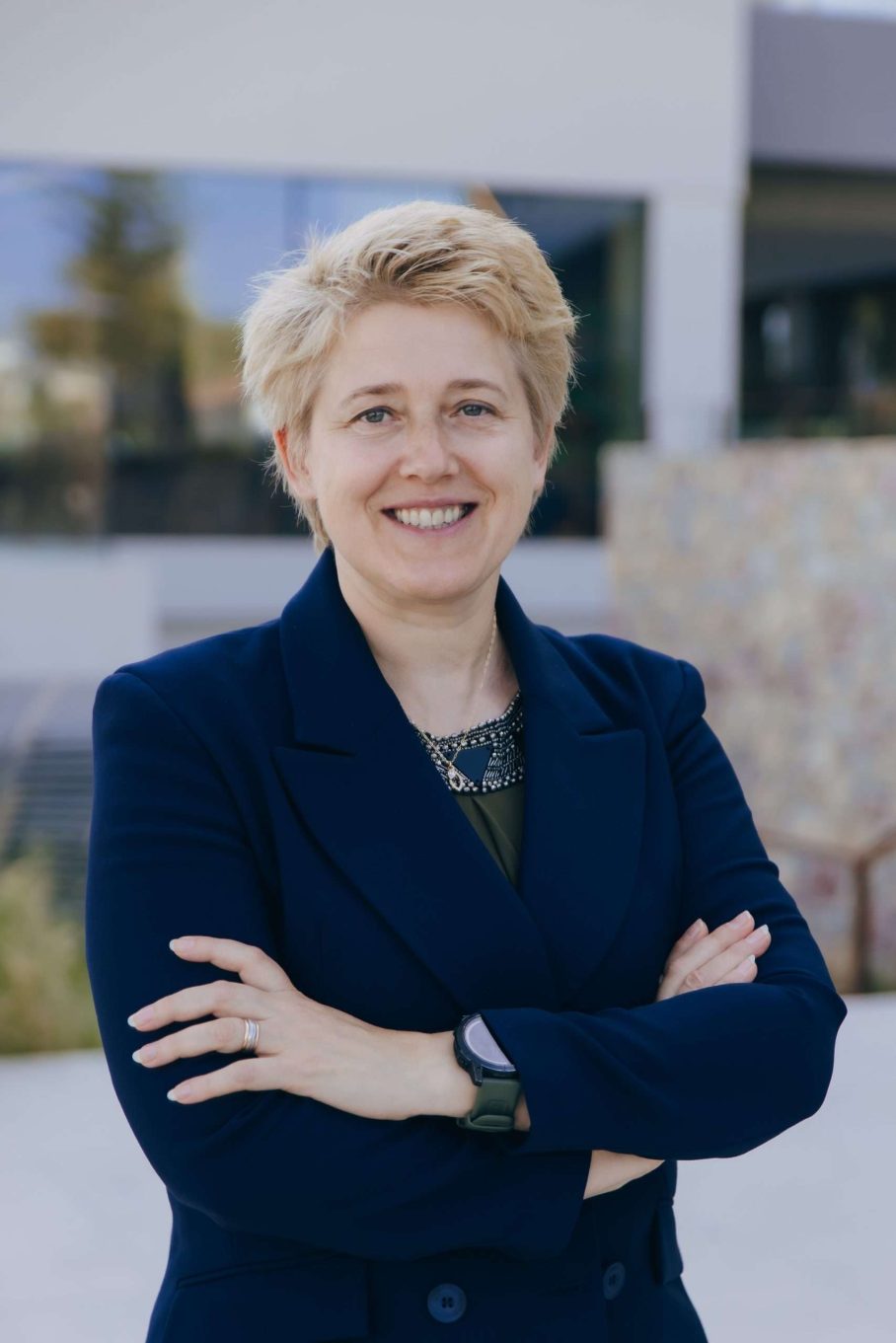
With the International Olympic Committee’s new Fit for the Future program, every sport has to prove their relevance to ensure it stays on the Olympic program, shooting sports included. Elena Allen, Sport Director of the European Shooting Confederation joins us to talk about how the sport is trying to modernize and grow its membership in order to remain an Olympic sport. From financial grants to new shooting formats, the European Shooting Confederation is seeing new growth that’s boosting the sport throughout Europe.
Elena’s competed at three Olympics in skeet shooting: Beijing 2008, London 2012 and Rio 2016. Amazingly, she took 14th place at each Games. [If you’re one of our Patreon patrons at the bonus content level, you might find this interesting, given that we’re covering Olympic three-peats and more on Patreon this year.] We talk with her about her Olympic experiences – and the Olympic star she ignored while on the hunt for Olympic pins.
Also on this episode, we continue our quest to figure out where the LA 2028 Olympic torch relay will travel when it makes its 50-state journey around the country. This week we add two potential cities to the list. Listen to find out which ones could be in the mix!
LA 2028 also annouced a local licensee program called Made for Two-Eight. We discuss what that could mean for small creators and manufacturers trying to be part of the Olympics and Paralympics.
Plus, the IOC published a list of broadcasters showing the 2026 Youth Olympic Games. We break down some of the big names and wonder just what of these Games we’ll be able to see.
Photo Photo courtesy of European Shooting Confederation.
If you liked this story, be sure to check out these episodes:
Get more great stories in our free weekly newsletter!
TRANSCRIPT
450-Elena Allen on Maintaining Shooting Sports’ Relevance on the Olympic Program
Theme Music
Jill Jaracz: [00:00:30] Hello, and welcome to another episode of Keep the Flame Alive, the podcast for fans of the Olympics and Paralympics. If you love the games, we are the show for you. I am your host, Jill Jaracz, joined as always by my lovely co-host, Alison Brown. Alison, hello. How are you?
Alison Brown: Hello. I’m doing okay. Nothing too exciting this week, thankfully.
Jill Jaracz: At least we got some news though, so
Alison Brown: that’s- I know. We did get some good news.
Jill Jaracz: Yeah. I was very worried that we take a couple of weeks and do pre-taped shows, all the news happens, and [00:01:00] then of course we’re back and nothing happens. But stuff has happened this week, so that’s good.
Alison Brown: keeping it real.
Keeping it real, LA. We appreciate that.
Jill Jaracz: Right. So, uh, thank you to everybody who came out to, watch the Torched LA Zoom that I did with Alyssa Walker over at Torched LA. We will have a link to the show notes. If you, missed that, you can catch the replay. It was a lot of fun. We talked a lot about, , LA and city government and, what happens and just things to keep aware of when we’re talking about what [00:01:30] the city has to do to help put on a games.
Patron of the Week
Jill Jaracz: And you know who was there? Very exciting. Our friend Jason Sisney. Our new friend. Yes. Who also happens to be the patron of the week this week.
Alison Brown: Very nice, Jason.
Jill Jaracz: So thank you so much, Jason. Jason has, been a recent guest of the show and decided to become a patron, .
So Jason, thank you for, being a listener and, also being a guest and helping us understand what California is doing to help LA with the games. [00:02:00] So we appreciate what you do for us.
Elena Allen interview
Jill Jaracz: We got a good interview this week.
Alison Brown: Always a good show.
Jill Jaracz: Today, we are talking with Elena Allen, who is a three-time Olympic skeet shooter who competed at 2008, 2012, and 2016.
Elena Allen is a three-time Olympic skeet shooter who competed at 2008, 2012, and 2016. And, you know, speaking of Patreon, and this year we’ve been doing, , three-peats and beyond in terms of [00:02:30] medalists, , for our bonus content this year, and, Elena is also a three-peat. she three-peated 14th place.
Alison Brown: Well, just being at three Olympics is always amazing to me, when someone can sustain that level of performance over so many- Yes … years. That’s amazing to me. And it’s kinda funny, 14. So I said I don’t know if Elena’s lucky number is 14 or her unlucky number is 14- … depending on how she views her Olympic experiences.
Jill Jaracz: True. True. But it, it is kind of a coincidence that [00:03:00] she placed the same every games. but yes, skeet shooting. We get into it, so that’s exciting. Now she is the sport director of the European Shooting Confederation and works to help the organization’s members grow the sport. To that end, the confederation has a new grant program for its members that we discuss, and we also talk about shooting’s efforts to become more relevant as an Olympic sport and be more, as Kirstie Coventry might say, fit for the future.
And, uh, we get into Elena’s Olympic experiences, which are pretty [00:03:30] wild. Take a listen.
Alison Brown: Elena Allen, thank you so much for joining us. We’re excited to talk to you s- about some shooting.
Elena Allen: Well, it’s a pleasure being here. Thank you for asking me to be part of this program.
Elena Allen’s role as Sports Director of the European Shooting Confederation
Alison Brown: So first, let’s start with real basics, with explaining your role as the sports director of the European Shooting Confederation.
what do you do every day?
Elena Allen: Every day is an extremely busy day. I get a lot of emails that I have to deal with from, federations, , or [00:04:00] from ITOs, that’s our jury referees. So I deal with problems, I deal with, organizing competitions, helping to bridge the gap between federations, organizing committees, athletes.
I help out with the development grant program to ensure that our federations get value for money. sort of sorting out things that they need, help out in whichever way I can. So we are there for our federations to ensure that things run smoothly, to ensure that competitions go ahead [00:04:30] as planned, help organize documentation.
Lots and lots and lots of things. But I get a lot of emails, so that does kind of extend my day somewhat because I cannot get on with the work till I deal with about 30 emails a day.
Alison Brown: So the confederation is not an international federation?
Elena Allen: No, we are European Shooting Confederation, so we have 55, members, and we are mainly concerned with European championships in [00:05:00] rifle, pistol, and shotgun, and also we have smaller championships of the European level.
So it’s everything which happens in Europe. And we do have International Sport Shooting Federation, that’s ISSF, and that’s a slightly different structure.
Alison Brown: So then what’s your relationship with the national governing boards as opposed to the federations?
Elena Allen: Well, we deal with the shooting federations, European- Right
shooting [00:05:30] federations. So let’s take, Great Britain. I live in Great Britain, so that’s British Shooting Limited. Uh, so we will deal with British Shooting. We will not deal with anyone else or any national federations. Everything has to go through the main body in a given country. Because the teams, the athletes, so for the competitions, they have to enter the athletes through their, federation.
So that’s why. So if you want to go [00:06:00] on a course organized by the ESC, for example, we just recently had a online, coaching course or seals course to help our member federation as well, everything has to go through the federation. We do not deal with individuals directly.
Alison Brown: So you are an Olympian yourself, How does that affect what you do every day and how you look at the athletes?
Elena Allen: I think it just gives you a better perspective because you’ve been on the inside of things and it’s, it’s not sort of a, [00:06:30] a quick process. It takes a while to get there, and I think I’ve given shooting about 20 years of my life, so…
And I only retired when I had my twin boys in, 2020. So I still feel a little bit part of it, although I’m not competing. I know what it feels like. I know what it’s like. I know all, all ins and outs and how hard it is. So I think it’s, um, it gives you a great perspective, not just coming from the point of view of an administrator who steps into a job or even [00:07:00] someone coming from a different sport, because shooting is quite unique.
It’s more similar to golf, for example. the mental strength that you need, a lot of people can shoot, but not many can achieve great results because, technique only counts for a small percentage of your ability to achieve high results or good finishes, so it’s the mental side of things. So it’s great coming from the exactly same background and knowing all, everything that’s sort of from the athlete’s point of [00:07:30] view, and then bringing that experience into the job.
Hopefully, I can do some good.
Alison Brown: Is it ever a hindrance where you say to yourself, “Ooh, I’m not, I’m not an athlete anymore. I’m an administrator. I have to take that hat off”?
Elena Allen: I don’t think so. Not yet. Maybe at some point in time it will become it. I hope not. I would say also having an experience of being chair of the European Shooting Confederation’s Athletes Committee, I felt it [00:08:00] was quite a strong advantage.
I was still an athlete. I was dealing with various groups of athletes from, shotgun, and on shotgun you’ve got trap and skeet, then rifle and pistol. So I’ve had a number of meetings, I think it was at 2019, and it was actually interesting to see. I could see that, I mean, as a sport we needed to modernize, and we still need to modernize to ensure we- we’re attractive for the viewers because that’s one of the, criterias to stay in the Olympics, and we want to remain, an Olympic [00:08:30] sport.
but also seeing how quite a lot of the athletes are only able to see from their perspective what’s best for me. And unfortunately, you know, in this sport, everything moves on. Things are not stationary. You want– You’re comfortable in, in yourself and your sport and you stay as you are ’cause we’ll be left behind, and potentially we could be out of the Olympics if we don’t move with the time, with the changes.
So yeah, I would say that was quite interesting. Still being an athlete and seeing how things [00:09:00] actually work in the minds of some people, I am able to put myself outside and to see what’s best for the sport, and you do have to sometimes sacrifice certain things. It is a sport that’s been, in the Olympics from the start, from 1896 when the first Olympic Games were held.
it’s great to say, “Yes, we’re a traditional sport. We’ve always been there and we’ll stay there.” That is not the case.
Modernizing shooting sports for the Olympics
Alison Brown: Right. Because Kirsty Coventry has put the fear of God into every single federation and every single sport that nothing is [00:09:30] sacred. Were you hearing those kind of murmurs before Fit for the Future came out?
Elena Allen: for the shooting sport, we’ve always been on our, toes, if you like. It’s always been one of the, and still is, one of the main topics, will we remain in the Olympic movement? Because we know that in some countries we’re not a popular sport, for various reasons. Some of them, are not justified, completely unjustifiable, but that’s just the way, it’s been.
Like we’re seen as an elite sport, for example, in Great Britain or for [00:10:00] certain, layers of the society, which is not the case. so yeah, we’ve never been comfortable in, in a fact that thinking we’re here for the long run. It’s always been we want to stay, we need to do things to remain, as part of the Olympic movement.
But I was actually in Lausanne at at the main office, at the beginning of June. I sit on the executive committee of the international, of the ISSF, International Sport Shooting Federation. We had, a representative from the IOC give us a talk, and [00:10:30] this is one of the things which came out that, no sport is safe.
there are strict criterias that each sport will have to hit. and yes, we, w- we do have to do things. We have to modernize. We have to try to do better to remain, part of the Olympic movement.
Jill Jaracz: What are the kind of things that shooting could modernize?
Elena Allen: I would say the biggest thing is to appeal more to the viewers, to the fans.
we cannot just [00:11:00] rely solely on certain countries supporting the athletes, tho- those athletes who make the finals and, creating a huge audience because of that. What if those athletes don’t– do not qualify and we have, lesser supporting, fans tuning in and giving us less viewing figures? But of course, it’s also measured in the engagement, on social media platforms, not just the viewing figures.
There are a number of different criterias. So it’s just becoming Easier to understand, for those [00:11:30] tuning in to watch our sport. And at the AEC we are trying to, um, we are trialing certain formats which are different from the traditional formats where you… Well, with the scoring system more so, as well as slightly different formats like, archery is turning themselves around and I enjoy watching archery.
it’s one-to-one, head-to-head. So we at the AEC have introduced, for example, solo competitions. It is head-to-head, and then it [00:12:00] sort of knock on, knock off, sorry, going through stages till we get into the final. It’s also quite exciting for the athletes because you are, you’re like in the final every,
every round that you do, it’s like a mini final. It’s easy for people at home to understand because you just have head-to-head two athletes competing against one another. Then we also have– we’re trialing a different scoring system, which is quite good. I think So I, I’ve done some live commentary for the shooting sport, and as [00:12:30] a commentator it was much easier to understand.
Instead of counting every target that’s been hit, than having, let’s say, showing figures of twenty-three versus someone’s twenty-four, twenty-two. That’s for shotgun. For rifle, it’s even more complicated because we have ten point nine, ten point eight, nine point eight, depends what they hit. So I get lost.
After a couple of those shots, I, I can’t work out who’s doing what. And if it’s difficult for me to understand, it’s obviously much more difficult for Joe Bloggs coming, [00:13:00] tuning in and trying to watch. So the formats, we have trialed, which athletes also like, so doing like a mini round, for example, if, let’s take, skeet shooting, so we shoot pairs on various stations.
So one station, say station three, where we shoot two pairs, a regular pair and a reverse pair. so that’s four targets in total. Instead of counting every one and continuing with the score of counting the score as a total, we just go by station. So on the [00:13:30] given station, if someone… Let’s say we have two athletes shooting against one another.
So if one athlete hits three, the other one four, the winning athlete will take two points. The losing athlete will have zero. If the scores are tied, it will be one all And we have a number of those rounds, so it’s much easier. So you have two-zero or, two all, and it goes to best of six. If the score is tied after this, then we will have a shoot-off.
It’s a sudden death shoot-off. Whoever misses first, [00:14:00] that’s the losing athlete and the other athlete wins. So just trying to introduce something that’s more attractive for people to watch at home, and also make the sport attractive in itself to make it more exciting, more interesting to watch, keeping that energy going right to the last shot
Jill Jaracz: Well, and it also sounds like those changes are not so drastically different for the athletes because, like, change in a sport is really difficult.
Elena Allen: Yes, indeed. [00:14:30] And we have had, the drastic changes over the past so many years. you may not be aware, but, at the moment we shoot a qualification system which is, as you say the word, drastically different to the actual final. That’s much more so than, just making those small changes. And if people manage to fit in with that and get used to that, I think something like that shouldn’t be too much of a shock.
But again, because we are the European Confederation, we’re limited [00:15:00] to certain levels, you know. we’re not the International Confederation, so we can only introduce those changes in, the competitions that we organize.
Alison Brown: But if it works, it works, and the International Federation, you hope, is paying attention.
Elena Allen: Well, let, let’s wait and see. Hopefully. ‘Cause European Confederation was actually the first one to trial the new, finals format. I remember being at the European Championships in Kazan. [00:15:30] So I’m a shotgun shooter. and in Kazan we have European Championships. I remember we’ve shot the main competition, and then after the competition, the next day they were trialing, shooting doubles on stations three, four, five.
That’s what now happens in the final for skeet. This is where the whole final is shot. and yes, it was weird. We never used to shoot, reverse doubles on station three and five, for example. We only ever used to shoot singles, which now doesn’t happen. Those targets have gone. [00:16:00] So, you know, it’s quite interesting, and I never really foresaw this format being taken on and becoming part of, the main competition.
So you never know. Things do have a, a funny way of making their way into the main program.
Shooting disciplines are drastically different
Jill Jaracz: When you got into the Athletes Commission, what did you learn about the other types of shooting, the target shooting, that surprised you? Even though you’re all the same sport, it’s very, [00:16:30] very different.
Elena Allen: I suppose I’m still learning.
the biggest thing is just how different we are. We have the same heading, shooting, but we are so different. I’ve always known that, the athletes who took part in, rifle, pistol, and shotgun are different. But even within shotgun, trap and skeet, there are different characters which are attracted to the two different disciplines, and that’s shotgun.
And then you have, the rifle and pistol side of things, [00:17:00] and it’s so, so different. And a lot of people do not understand. Those people who just hear the word shooting, they assume it’s all the same. It’s not just the weapons that we use are different. It’s not… I think in rifle shooting, people are more within themselves.
They’re more contained. They’re calmer. Because the nature of the game, they, they, they either laid there or standing there because they have like three P, three position, for example, where one is prone, so that’s laid down, kneeling, and standing. And I couldn’t do it. I [00:17:30] just wouldn’t have the patience to, to be there concentrating and just keeping in your own, space.
In your own sort of being within yourself and trying to keep your heart rate going. clay target shooting, your heart goes up and down. It’s actually good to have a bit of a raised heart rate when you’re going on a station because you will shoot better. You need the adrenaline, whereas they do the opposite.
They need to get their heart rate down. So yeah, it’s very different, and that’s what– That’s the biggest surprise, just how different the shooting sports are, even [00:18:00] though we have the same heading as shooting.
Why shooting isn’t as popular a sport
Alison Brown: You alluded before about the popularity, so let’s talk a little bit about that, shooting isn’t as popular as some other sports. what do you think is the problem?
Elena Allen: Well, the biggest problem is the word guns. So that immediately scares some people or raises the red flags, even though they do not realize that those people who shoot, we have to behave.
We cannot step out of [00:18:30] line. We will lose our licenses. We cannot have an argument with anyone. We can’t behave in a certain way, the way they, you know, other people would behave. So we are the most law-abiding people there are. So the misconception, you know, is this. And, usually the problem is with the illegal guns, not those which are held legally.
We have to have licenses. We have to be approved. We go through stringent procedures, to have those license and to be part of the sport. [00:19:00] Secondly, in some countries it is seen as an activity which is done by more privileged layers of the society, which is also a huge misconception.
It all depends on the country, but for example, in Great Britain, the farming community is hugely involved in shooting. They have to have weapons to control, for example, rat populations, rabbits eating the crops, pigeons, again, damaging the crops. you know, like it or not, this has to be done in order to protect, their [00:19:30] livelihood.
we do not have natural predators for some of the, animals, if you like. And it starts from an early age. So they acquire, an air rifle. So you have to be of a certain age as well. You cannot start it when you’re really little, the way you get involved in other sports.
So with shooting, you have to be a little bit older, so you acquire your first firearm or first shotgun, and it starts from there. People develop an interest, and they move on to clay targets. and in other countries, they just involve youngsters, from schools involve them in [00:20:00] sport, and they start them like this.
So the main thing to say this is it’s target shooting. It is not, real-life shooting. Again, the word shooting, guns, you know, all that. So I think it’s, it’s just misfortune that there’s a, there’s a misconception around the world, for those people who do not know much. Potentially, that’s one of the problems.
and then hearing certain incidents throughout the world which happen also doesn’t help the sport
Alison Brown: Yeah, I’m thinking in the United States where it’s [00:20:30] such a gun culture and such an activity, yet shooting sports aren’t necessarily that popular
Elena Allen: I think you will find that they have a, a massive shooting community. that is why Americans have always been able to, uh, like dominate, for example, in shotgun shooting.
amazingly popular. If you’ve been to any of their ranges, it is like mind-boggling for someone like me to, to come to shoot a competition there and to [00:21:00] find they don’t have just five ranges, they have 20 ranges. and you just think, how do you fill those ranges? But they do. And people travel, you know, travel distances are not just sort of get in the car, drive two hours, which we complain about that as being far away.
They drive for like a day to get somewhere. so they do have, a huge, amount of shooters taking part, mostly at the national level. So they are slightly different competitions to the [00:21:30] ones we shoot in the Olympic movement because Olympic disciplines are fairly tough. The speed of the targets is fast, quite unforgiving.
So when people are first starting, it’s even in the UK, so we have, for example, down the line, universal trap, whereas in the Olympics you shoot, Olympic trap, which is, so five station, 15 different traps. So from each station you will have three targets, left, right, and center, and they go pretty quick.
Uh, the same for, for example, for skeet [00:22:00] you have English skeet, so that’s two houses just to, to briefly explain to you, and targets fly across the range. So the non-Olympic disciplines, they will be slower. So they have American skeet in America, whereas Olympic ones are tough, fast targets, gun down, sort of more st-strict rules.
So people prefer to stay on the national level because it’s a little bit easier. You don’t have to dedicate yourself as much to training regularly. You can come and just have fun. The Olympic disciplines are more [00:22:30] unforgiving and less rewarding.
The type of person that becomes an elite competitive shooter
Jill Jaracz: What type of person then makes that jump?
Elena Allen: a person who would like– who is talented, who finds the national disciplines easy, or who’s had a dream for, from a young age watching Olympics on the television or being taken to shooting grounds by parents, for example, and seeing the different sides and wanting to go specifically for the Olympics, be part of the Olympic movement, go to the Olympics.
[00:23:00] sometimes it’s people making jump, the jump, and sometimes it’s people who come straight into the Olympic disciplines.
The lure – and expense – of shooting sports
Jill Jaracz: Because it fascinates me. I tell you, I, The addiction of shotgun. my, uh, husband and I used to live in Massachusetts and, we got into summer biathlon, which led to us purchasing rifles, which in Massachusetts you had to join a gun club to get a license.
And we saw the, the clay shooting and I said, “Oh no, that’s, that’s gonna be an addiction. We [00:23:30] cannot try that at all.” ‘Cause I had tried it at a, at a women’s event and like, oh, it’s a lot of fun and it’s scary, but it’s expensive. That’s an expensive sport to get… I mean, they’re all expensive, but that was– I saw that as an addiction that I could not get myself into.
Would’ve, would’ve ended badly.
Elena Allen: Yes, you are right. It is definitely an addiction. I come from a shooting family and I never wanted to shoot. and my mom tried various ways to try and get me into [00:24:00] shooting, and the one way she succeeded, it didn’t help when she took me on the s- uh, skeet layout. I still didn’t quite, you know, I shot a couple of targets and I didn’t want to do it.
I didn’t like the fact that you had to have the gun down. And then she took me on a trap layout, let someone else, put me in the correct position, let me shoot. The first target I hit there, that was it. I- Right. Yes. And you raise a very good point. Yes, it is expensive now. It didn’t used to be [00:24:30] expensive.
After COVID, the price of ammunition somehow has really shot up, and I presume, part of it is to do with the world situation. clays have also gone up in price. Unfortunately, yes, it, it is becoming more expensive. But in some of the countries worldwide, they do have schemes where shooters do not pay for anything, and in those countries it’s much easier to get into the sport.
Otherwise, you rely on parents having enough budget to bring you into this and help you on the way. [00:25:00] Once you achieve a certain level, in other countries, you get onto the scheme where everything is paid for, you get looked after by your federation, but you have to get there in those unfortunate countries that don’t have the schemes from, from the start.
How the ESC is providing support to further the sport
Jill Jaracz: In Europe, in your, your role, do you see that, that some countries in Europe have this and some don’t?
Elena Allen: Yes, uh, very much so. And we– That’s one of the things we’ve, we’ve started [00:25:30] doing this year. We’ve introduced the grant. So each federation… So some countries have two federations because they have rifle and pistol federation separate from shotgun.
so each joint federation can apply, for a development grant of up to 200,000 euros. If the federations are split, obviously the, the money is split. It’s 100,000 euros each. And the word is development grant, that is to help develop shooting in those [00:26:00] federations. And we have seen this year a number of federations which have been absent from the international shooting make their way back because the money is given.
It’s not just, “Here you go, spend it as you like.” It’s actually for the development of shooting in those countries for the future, be it, creating new shooting facilities, as is the case, for example, in Georgia. That’s Georgia in Europe, not in the USA. Um, [00:26:30] Ukraine, so they’re building brand new facilities and that money will go towards that.
modernizing existing facilities, for example, in Albania. also, in Ireland, rifle and pistol side of things, we haven’t seen shooters for, for some years. this is the first year they’ve made their way back. They’ve taken active part. It’s great to see them. Liechtenstein, the same. give– So giving money towards training, towards going to competitions, uh, helping with [00:27:00] acquiring equipment, be it, the actual weapons that they need or ammunition and clay targets for shotgun, for example.
So things like this, I think it makes a huge difference. Even, uh, helping buy uniforms so the team looks like a team. we also have rules. They always have to wear uniforms. If they wear medals, they must wear uniforms. So things like this which, for example, a uniform seems like a small part of it. You think, well, you [00:27:30] know.
But some countries don’t have the money to spend it on uniforms because they’re spending it on more sort of things geared towards actual shooting and training. So I think it’s great to offer this, opportunity and not only… I think one of the most wonderful things that our partners who work with the ISC, they also offer us, or our federations, they offer discounts, so we’re able to acquire the equipment and certain things at a cheaper rate, so the [00:28:00] money goes further And just to say that 200,000 is for a four-year period, so it’s not every year we can afford to give 200,000, but it is, it’s a huge amount of money.
It’s never been done before. And the feedback has been quite amazing, to hear just how much it’s helping those federations and countries, to promote the sport, to attract new shooters, youngsters to come in, to have the weapons to, or to have the, for example, the targets, electronic targets in rifle and pistol, [00:28:30] so they’re not shooting the old paper targets.
they’re actually shooting the targets which are used at international competitions. It also makes the athletes themself feel important and, you know, they’re competing at the same level as international athletes. I think that makes a huge difference.
Jill Jaracz: Does that then increase the level of competition and just raise the level of the sport because you have more people, or is that yet to be seen?
Elena Allen: Not necessarily at the top level, but it certainly it’s [00:29:00] encouraging the youngsters to come into the sport, to give them better opportunities to engage them more in the sport of shooting. So hopefully they will stay, and they will be the ones who will be knocking on the door in a few years’ time because it does take a number of years to reach a high level.
So it is not sort of for the athletes who are already there competing at this elite level, but more so for the youngsters, for the sport, for the development of the sport itself within those federations to ensure they, not only that [00:29:30] they continue, but they will have a strong base to rely on. And by base, I mean also physically the facilities because facilities are also not, you know, it’s like a house.
You build it, but it needs maintaining. but for the maintenance you need money, but the sport also needs money, so that gives them the opportunity to be able to invest into the facilities and into the sport itself.
Alison Brown: And you’re already seeing the effects of this if you’re seeing new shooters [00:30:00] coming up from places that they hadn’t been.
Elena Allen: Well, definitely. As I mentioned, like Liechtenstein, first time this year, they’ve started sending, their athletes to the international competitions and after an absence also rifle and pistol, from Ireland. Their shooters have been taking an active part and it’s great to see them.
What success looks like to Elena Allen
Alison Brown: What does success for you in your role look like?
Elena Allen: Success for me is quite simple. When European [00:30:30] Championships, happens well, Obviously, there are always teething problems that most people or hopefully no one will ever see or know about. But to know we’ve done a great job and, we’re a new team this year.
a lot of us, it’s a small team actually . so we, we all learning as we go along. We are introducing sort of new processes, ironing things out. So to see things improving, to hear federations saying that they feel supported and it’s– we’re working [00:31:00] great as a team, that’s a huge, um… Well, it, it’s wonderful to hear that.
And also when our European Championships goes off well
Alison Brown: Shooters stay in the game for a long time, or they can. is this funding going to be able to affect that as well so that people could stay in the game a little bit longer?
Elena Allen: I think the staying in the game a bit longer will come down to the actual athlete. I will quote one shooter who shoots– It’s not part of the European [00:31:30] Confederation.
He shoots for Kuwait, Abdullah Al Rashidi. He was there before I started, and he’s still there continuing on now . He won, bronze medals, I believe it was in Rio and in Tokyo. the first Olympic medal, if I’m not mistaken, he was maybe 54, 57. He was in his 50s, near mid-50s, and I think he’s a fine example of someone who’s been doing it a long time and continues to do it a long time at a high level.
You have [00:32:00] to have that desire to continue doing it because it is, um, it’s your life. you dedicate… That’s all you do, you think, you breathe is shooting. It’s a bit harder for women who have families. Quite often, if they have a supporting family, they can come back. but that’s the main obstacle for women.
And personally, for me, I found once I had my children, I did not want to dedicate my life to shooting. For me, my children are the most important little human beings . so wherever [00:32:30] you still have that desire, you will continue. once you get to a certain level, what happens lower down at the federation level, it’s less likely to affect you because if you are there and you’re continuing to do it, usually you are at the top level, so you will have the funding.
Uh, most countries will have funding on the government level. I think it is more so for the up-and-coming shooters and for the, shooting federations themselves to ensure there’s a legacy left for people, for [00:33:00] shooters, for athletes coming in and continuing at a mid, um, lower level, and also bringing the new generation of shooters in.
You cannot just rest on your laurels and, sort of think we’ve done a great job and forget about developing the sport and attracting new generations
Elena’s experience at Beijing 2008
Alison Brown: So let’s go back and just talk about your Olympic experiences starting with Beijing. You know, what was your first impression when you showed up at the airport?
Elena Allen: Oh, that’s a good one. I don’t [00:33:30] really remember.
Jill Jaracz: Fair enough. Do you-
Alison Brown: What do you remember?
Jill Jaracz: Do you– Well, what was it like when you made the team for the first time? the Olympic team.
Elena Allen: Okay, that wasn’t quite a smooth process. I don’t want to, um, portray it from a negative point. It wasn’t plain sailing because, of certain things in my federation.
I won my Olympic quota, I think, in 2006 or [00:34:00] ‘7. I can’t– 2006, I think, actually. And when I won the quota, I already had– I had a problem with my shoulder. I had to have an operation, and I delayed having the operation for about eight months, knowing that this was my, potential qualification period. And my operation was scheduled, uh, the day after I came back from the European Championships in Croatia.
So yeah, it was quite amazing to win the quota and then to come back home and go under the, [00:34:30] you know, under the knife.
but you know, I had plenty of time to recover. I think one of the things I was really looking forward to, silly as it sounds, in getting the, is getting the uniform, the equipment, that special day in Great Britain.
It’s extremely, amazing, uh, the day where you get together. You go usually to the Bir- Birmingham, NIC, I think it’s called, the, the exhibition center. an amazing special day where you go try out, uh, different [00:35:00] uniforms, various activities. Oh, it’s just… Still, that was amazing. Then when we went scheduled to go to Beijing, we had to go to… Well, supposedly it-it’s like, um, for Great Britain before any Olympics, you go to, uh, like a holding camp. for shooting unfortunately, we couldn’t have any, uh, training there because there are no facilities. so we went to Macau, and I do remember [00:35:30] traveling there, with the team. I remember having a layover somewhere and then you know, the usual difficulties with the weapons, getting the firearms transferred.
we arrived in Macau and it was like, wow. And seeing the athletics guys, I was like, wow. You know? Because shooters usually, we’re all shapes, forms, sizes, different ages. For most sports, that is not the case. You know, they’re in their prime in their mid-20s. and at the time, [00:36:00] I’m not going to mention my age, but I came into shooting fairly late in life.
So we’re just like, oh my God, they’re proper athletes. Uh, yeah. Then we moved on to Beijing, and of course, your first love is always special. That’s, I think, uh, how many Olympics you go after, the first Olympics is the one that is the most special one, and Beijing was just amazing. yeah. A- and obviously, as you know, I mean, it was a fantastic show.
No money was [00:36:30] spared for the opening, closing ceremony. A fantastic, event altogether for all involved, be it spectator or athlete, coaches. And it was very affordable for anyone traveling from abroad to come enjoy the spectacle. So my husband came as a spectator, and I think tickets, if I remember correctly, cost about, £6 or three or six, but it was something ridiculously small.
Just small change. and everything, it was so easy to [00:37:00] get around the place, accommodation, everything. It was just an amazing, an amazing experience.
Elena Allen’s London 2012 experience
Alison Brown: And then you get a home games.
Elena Allen: Yes, home games.
Alison Brown: So London 2012 was, I would expect pretty special.
Elena Allen: Of course, it’s special to have it at home. I’ve had the, added burden of my family coming over who lived abroad. So for me it was difficult because I had to organize everything for them. and that was [00:37:30] hard.
My mum still doesn’t speak English. She’s now looking after my kids at home, and she will be while I will be in the European Championships in Malagas for almost three weeks. I’m sure she will manage. you know, and having to do that side, I wish I didn’t have to. Then my family, decided not to tell me that my sister broke her foot and, she was on crutches.
So when I was on the, uh, athletes bus going to the venue for my first day of the competition, I don’t know how, I look out of the window [00:38:00] and there’s my sister on crutches trying to make her way to the venue, and it’s like, ah, whoever bright idea that was, how they thought, you know, I was not going to find out.
That was quite silly.
Alison Brown: They just didn’t want to burden you, Elena. Didn’t want to burden you.
Elena Allen: Well, I think it would’ve been better, you know, just- Yes … say the same thing through. so in that respect, it’s better when you go to the Olympics, like, uh, I can only go by what Team GB does, [00:38:30] is we turn our phones off and we tell the team how we want to, for things to progress if you get bad news from home, because things happen.
A loved one might die, or someone might get sick, and whether you want to know about it before the competition or whether you would rather be told after the competition, things like this. It’s life. Things happen. So yes, you, you’ve worked really hard for, for the past four years to make it to the, to the event, and things like this, as you know, can have a major impact on your [00:39:00] performance.
So I, I suppose I didn’t think this through and I should’ve had a word with my family. But no, it was great. I mean, it was great to be part of the home team. It was quite difficult. In those days, we did not have many spectators. We did not have people clapping, et cetera. I found that very difficult after I shot station one.
I knew it was coming. Uh, there’s no excuse, but I still, I, I, I did struggle with that side of things.
Alison Brown: Oh, that [00:39:30] you had spectators at the Olympics versus it at other competitions?
Elena Allen: Spect- Well, we don’t normally have spectators, but I- Right … spectators who are actively cheering. Now it is part of the game. Now we have music playing, but this was just starting, you know.
This, this was the early days of… So I, I, I struggled. The competition was extremely difficult for me. I didn’t do very well, mentally. even though I knew it was coming, but I just So for me, London was difficult.
Training to compete with spectators
Jill Jaracz: [00:40:00] That’s so interesting. when you think back on it now, are there ways that coaches or federations help their athletes train to suddenly have spectators?
Elena Allen: Yes, of course. You can do lots of different things. You can do, um, training under various conditions. But sometimes, as good a training as you do things, when things happen in real life, it’s all about your mindset, and I just, [00:40:30] I did not prepare myself well, even though I knew it was coming, and unfortunately, I turned it into a negative experience rather than a positive one.
you know, I’ve had other experiences, for example, Commonwealth Games, uh, in Glasgow. Again, home games. Even though it’s Scotland, it’s still home games. turning up and going out to shoot the first round, they said, “Oh, there’ll be live cameras.” And it’s like, “Great.” You know, one day it might have been, “Oh my God,” ’cause we’re not used to having the interest from, [00:41:00] from the whole world, if you like, or, I actually turned it into positive.
I, I enjoyed having, the attention. Yet in London, sort of a similar thing had a negative effect. Just sometimes you don’t do as well as you should do. it’s a sport, and shooting is very much, very much of a mental game
Jill Jaracz: it’s so fascinating, especially like we think, especially in Paralympics, there’s another element of having no crowd and then suddenly having a [00:41:30] crowd and having to deal with that. Or even today, today’s athletes have to be online more. And even if they’re kind of online because the younger generations are online, there’s a difference between being online and consuming versus being online and being the content creator in order to push your sport forward.
Elena Allen: Yes, that’s a very difficult one, and I think you will be able to see it also if you go and follow, various athletes. You will be able to [00:42:00] see the older generation-
Jill Jaracz: Mm-hmm …
Elena Allen: versus the younger generation. the younger generation does not have a problem. Everything’s online. Whereas for the older shooters, it is difficult.
in my latter years, I also had to try and post certain things on social media, because of the sponsorship. I personally struggle with it. Even knowing about this interview coming forward, as I said to you guys before we started, it’s a terrifying experience ’cause I just, I’m not used to this. I, I’m a very private [00:42:30] person.
but it is something you can’t get away with, and you need it to promote the sport. We do all understand this, but some of us find it harder than others.
Alison Brown: Yeah. It’s, personality and, and preference. It’s not just, “Oh, this is, what I need to do to be really good at my sport,” because it’s not.
it’s a sideline, but sometimes you need it when you’ve got sponsorships.
Elena Allen: Yes. It’s necessary in order to, stay at the top of this game, if you have sponsors to [00:43:00] continue for them. there is a reason they’re sponsoring you. You need to put their product on the map, if you like, and to continue promoting it.
And also for the sport itself, the sport, for the sport as a whole, we need media exposure. It’s very important, not only for us to be seen or noticed to be seen, but to continue to be seen, To remain in the public eye. Extremely important.
Jill Jaracz: So having something like the shooter from Turkey at the Olympics- Yes
who went viral, I mean, [00:43:30] which is just kind of magical when that happens, that turns out to be very good for the sport.
Elena Allen: Yes. We need another Dikshit. thanks to him really, it, it has made our viewing figures or our media engagement quite high. then you saw some of the other Olympians during their, successful performances at the Olympics making a certain gesture, a certain sign, which is, like, amazing, right?
it’s not like Usain Bolt doing his sort of pose, [00:44:00] everyone copying, but it’s actually someone copying an athlete, a shooting athlete. I mean, how amazing is that? and that’s exactly, I suppose, where social media is important is To show people the human side of someone so they can follow this person, they can get them engaged, this, this media engagement.
and we are trying to modernize. We are aware that we need this, for the athletes to be seen more from a human side to show what they do, behind the scenes, not just during [00:44:30] international matches or during Olympics, but also how they train, what they do at home, what they eat, what they wear, anything like this.
people seem to really respond more on a personal level than just seeing them performing in competitions.
Elena Allen’s Rio 2016 experience
Alison Brown: And then finally, just to tie up the bow on Rio, which was your last Olympics. Yeah, Rio- What’s your memories of that?
Elena Allen: It’s quite special because my husband, came as my coach, as an official coach. So it was wonderful, being able to [00:45:00] work with him as, as part of the team. Uh, we went to Belo Horizonte beforehand.
Uh, we had the, um, you know, as I said to you, the holding camp. And again, the athletics guys were there which was also wonderful, watching them train.
Alison Brown: Little, little eye candy for this time.
Elena Allen: Yeah. What– I don’t know why I’m so, um, uh, taken up by, uh, the athletics, but it was also quite interesting to see the difference within athletics and suddenly [00:45:30] realize, athletics is just like shooting.
There are different disciplines within athletics, and they don’t necessarily all communicate with one another. There are different camps. but just absolutely loved it. I loved seeing them training, and then obviously when you see them compete. from Belo Horizonte we moved, to, Rio. I loved– In Rio, one of the, the best things was that we had So if in Beijing, [00:46:00] Great Britain was in one building, but we had different entrances.
There were… I can’t remember now, but let’s say five-story buildings there with each individual entrance. So In my, the entrance where shooters were, we also had swimmers. Cyclists were next door, but that’s about it. So you had… Oh, and, boxers were using the same entrance. So they were really the teams that you interacted with.
Whereas in, in Rio, we had, a high-rise apartment block and the same entrance with two lifts. If I [00:46:30] remember correctly, we only had two lifts. So like it or not, the engagement and interaction within Team GBR was, you know, quite intimate and close, so you got to see all the different sports and different athletes.
I think that was the most wonderful thing. and just generally by that stage, I suppose having been to two Olympics, you kind of know how things work and, you can maximize your, Olympic experience more than at the previous ones. And I am quite obsessed with Olympic [00:47:00] pins. It’s a fact you may not know.
Alison Brown: Excellent.
Elena Allen: I can tell you a funny story that was in London. That’s something, um, that now and again pops in conversations. So obviously, um, I suppose be-being an athlete, I do things properly. So I normally, I print out lists of all the countries which are at the Olympics, and I target certain countries only because you’re given a, a set amount of, [00:47:30] pins that you can exchange with other athletes, and it’s the pins with Olympic rings on them, which are the, the going currency that you can exchange.
so o-on my priority list are countries with fewer athletes. So let’s say a country which has, only five or six athletes representing them, so they are the top priority. And this one time I was going to the international zone. I cannot remember. I, I think I needed to, to get something. So I was walking [00:48:00] along from the building where we were at, So our buildings there, there was a road in between.
There were other buildings for other teams. So I was walking towards that main road, and there was someone walking from the other buildings, towards this road. Then we would join this road and go together, towards the international zone. So I looked, and I see Ja– I, I just looked from head to head down.
It was Jamaica, and I was like, “Nah, I don’t want Jamaica. I’ve got this.” So I’m walking along, and I went to where I went, and they were like, “Sorry, we’re closed. We’ve got someone coming in, someone [00:48:30] important coming.” I thought, “Okay, I’ll come back.” So I turned around, and I went to go back, and then I see all these media guys running, running around, and I looked, and I see the tracksuit from Jamaica being Usain Bolt.
So because, you know, of my sort of this obsessiveness, I did not see Usain Bolt walking towards me. I just saw the track suit. The bi- biggest mistake, I suppose. [00:49:00] That would’ve been the best spin I could’ve
Jill Jaracz: got.
Elena Allen: So yes.
Alison Brown: You had, you had a one-track mind.
Jill Jaracz: Yes. Wow.
Elena Allen: And something I will never live down.
Jill Jaracz: Wow.
Alison Brown: Elena Allen, thank you so much. It’s been a lot of fun.
Elena Allen: Thank you so much for, um, for your questions. Thank you for showing interest in the sport of shooting. It is very much appreciated by the whole community, may I say so.
Jill Jaracz: I had forgotten that she ran into Usain Bolt. And was more concerned about the [00:49:30] pins. Thank you so much, Elena. You can find out more about the European Shooting Confederation at esc-shooting.org. We’ll have a link in the show notes
LA 2028 News: More potential torch relay stops
Alison Brown: As we said, we have some LA28 news.
Jill Jaracz: Yes. Oh, found a couple more cities that could be potential torch relay hosts. You don’t know how much ti-
Alison Brown: This has become your new rabbit hole is to find all the cities- Uh … and have the whole route planned out before they [00:50:00] announce it.
Jill Jaracz: I, I, well I don’t, I mean, like what still would be a surprise is where they go from Georgia basically.
Alison Brown: How they do this.
Jill Jaracz: Yes. that will be the big question. so if you listened to last week’s show, and if not, go back and listen, we figured out that once LA announced the torch relay you could find out some of the cities on the list because cities have to put this, measure of becoming a potential host for the [00:50:30] torch relay.
They had to go through their city councils to do that so it becomes part of the public record. found out a huge list last week. if you read our Substack newsletter you found out this week that Dallas is potentially on the list.
Potentially because the resolution that went through city council, uh, included the wording, quote, “The City of Dallas has been invited to participate in a future major international sporting event initiative being organized in communities throughout the United States.” [00:51:00] I don’t know what else it could be.
Alison Brown: A major international sporting event initiative. That’s a new way of describing the Olympic torch relay.
Jill Jaracz: I know, but props to Dallas along with Pittsburgh for keeping this confidential. Let’s be quite honest. Do- doing their
Alison Brown: best.
Jill Jaracz: Yes, exactly. So that is going through, their, legislative process right now.
Also on, the docket for Boise, Idaho City Council this week will look at a [00:51:30] resolution approving that, so we will look into whether or not, uh, that gets passed next week. Uh, so this is where we stand. These are cities that are discussing hosting the torch relay. Some have approved measures. Some are still, still sitting in city council.
we’re looking at Atlanta of course announced by, LA28. Savannah, Georgia approved this. Fresno, California approved. Minneapolis, Minnesota approved. Kansas City, Missouri; Springfield, Missouri; Madison, Wisconsin [00:52:00] approved. Cleveland, Ohio; Phoenix, Arizona; Jackson, Mississippi; Naples, Florida; Tampa, Florida approved.
South Lake Tahoe, California; Pittsburgh, Pennsylvania; and Bozeman, Montana approved. So list is getting longer. We’re gonna know where this torch is going, man I am excited to kind of figure it out. I’m also excited because I get to pit different AIs against each other, and that’s a lot of fun too. [00:52:30] See which ones work best.
all right. if you hear anything about the torch relay, let us know if it’s going on through your town or if you get involved with it, if it is already going through tow- your town. We wanna hear what’s going on on the ground.
Alison Brown: so
Jill Jaracz: excited. I
Alison addresses kerfuffle over driving distances in the U.S.
Alison Brown: need to
Jill Jaracz: address
Alison Brown: something that- Oh, yes … came up in our show last week.
Yes, please do. It has become a hot, become a hot topic on our Facebook group, which is Keep The Flame Alive podcast on Facebook. So I made an offhand comment that the [00:53:00] torch would probably not be coming anywhere, quote, “close to me,” and I was concerned about having to drive two hours to Hartford. And people really took issue with the fact, first, that I considered driving two hours to be far, and two, that I would not drive two hours for something as, as momentous as the torch relay.
And let me just say, I never said I wouldn’t drive that far. I said I would be [00:53:30] annoyed at driving that far. And I do wanna add, this is New England-level traffic that we’re talking about that I have to drive through. Oh, oh,
Jill Jaracz: okay. Which
Alison Brown: is- Uh, you
Jill Jaracz: know, okay … which is a whole
Alison Brown: other level.
Jill Jaracz: Well, I have lived in New England.
I have also driven the Borman in Northwest Indiana, and let me tell you, Chicago traffic and Northwest Indiana traffic, there are places all over this country that have- Absolutely … New England-level traffic. I mean, you might think they’re states you fly over. We think you’re states they [00:54:00] drive through.
Alison Brown: Apparently. People really have issues with how far I consider a driving distance, so I want to apologize to all the people who drive six to nine hours for these events, and I was unwilling to travel two. So we’ll, we’ll see where the torch relay ends up in my neck of the woods, ’cause none of these are in my neck of the woods.
We haven’t talked about any New England sites or New York sites. Yeah, not yet. Yeah, not yet. Not yet. So we [00:54:30] will see how close this friend of the torch relay comes to me.
Jill Jaracz: you know, it’s coming somewhere in the, in the vicinity ’cause it’s supposed to hit all 50 states.
Alison Brown: Exactly. So- So it’s gotta come through Connecticut somewhere, and then someone is gonna say, “Connecticut is a small state.
Just drive yourself there.” Okay. I, I heard the message
LA28 announces Made for Two-Eight program
Jill Jaracz: Oh. LA has announced a new licensing program called Made For 28, which is [00:55:00] going to allow small businesses in LA County to officially license the LA28 logo. Although, you know, can we go back to Brisbane 2032 calling the logo the emblem? Because now this- Do you like that
Alison Brown: better?
Jill Jaracz: No, I don’t. I like logo.
And, this press release that we got called LA28 emblem, quote unquote. They also used emblem as a word. So what, logo is out the door?
Alison Brown: Logo is low-key, I guess. Emblem is fancy talk. [00:55:30] I don’t
Jill Jaracz: know. Okay. All you graphic design listeners, let us know, is there a difference between logo and emblem, and emblem?
And is now emblem the new nomenclature that we have to use? ‘ Cause I will use lo- I, I’m gonna be ride or die logo Unless it’s now passé? Uh, well, then I wouldn’t be ride or die.
Alison Brown: Yeah, then you would just be a, a person who wouldn’t be willing to drive two hours- …
Jill Jaracz: to
Alison Brown: be a church ruler.
Jill Jaracz: [00:56:00] Anyway, LA28’s gonna license its logo or emblem, if you prefer, , to local makers, artisans, manufacturers to create unique products for the games and keep it local. So one of the licenses, uh, has been granted to Homeboy Industries, which is a gang intervention rehabilitation and reentry program. It looks like they’re gonna produce items with artwork they have designed on there.
And, you know, LA28’s [00:56:30] gonna have to approve all of the licensed products before you go out, so you can’t just get a license and do your own thing. it is gonna have to be approved. But the idea here is to pull in small makers and, get them in on some of this, LA 2028 excitement opportunity, financial opportunity.
And also, you know, local people will l- you know, you’re gonna get some cooler things, I think, in the merch shop. Right. It’ll be a lot less generic when you’ve got local makers coming up with new [00:57:00] ideas. there is, more information if you are in, like, it’s gonna be in LA County, at, rampla.org for more information coming up soon if you are one of these people.
IOC News: How to watch the Dakar 2026 Youth Olympic Games
Jill Jaracz: We’ve got a little bit of IOC news in the form of Youth Olympic Games news. Those open on October 31st, and the IOC has released a list of broadcasters. So if you’re interested [00:57:30] in watching the Youth Olympic Games, you can stream it on olympics.com and Olympic Channel. For those in countries that we have high listenership, Canada is putting it on the CBC. UK will have it on BBC. USA will have it on NBC Olympics. Australia will put it on Nine Network. Japan, you get a host of options, so it’ll be on Nippon Hoso Kyokai, Japan Broadcasters Association, Fuji TV, Nippon TV, Tokyo Broadcasting System, TV [00:58:00] Asahi, and TV Tokyo.
And then in Germany, it’s going to be on ARD and ZDF. We will have a link to the full list in the show notes
Alison Brown: So allegedly we’ll be able to see this. Allegedly. We’ll see what happens. Are you excited? I am kind of excited to see what Africa is gonna do with the games.
Jill Jaracz: Mm-hmm. You know, are
Alison Brown: we gonna get that real African flavor to it?
Jill Jaracz: I’m excited to see what the opening ceremony’s gonna be like.
Alison Brown: Yes.
Jill Jaracz: And I know they get toned down for the Youth Olympic Games, and that’s [00:58:30] cool, but I am excited to see some African flair and, culture that we don’t get exposed to very often, All right. If you wanna keep on top of where the torch relay could go, be sure to subscribe to our Substack. It is free. It’s a newsletter, comes out once a week, and, uh, we’ll have a link to that in the show notes. and that’s gonna do it for this episode.
Thank you so much for listening.
Alison Brown: And until next time, keep the flame [00:59:00] alive.