
On this episode we’re talking with Clara Hughes, one of Canada’s most famous Olympians. Clara has competed at six Olympics for Team Canada, earning six medals in the process.
When Clara got into sports, she started as a speed skater. However, she found success in cycling, her cross-training sport, and she first became an Olympian at Atlanta 1996, where she won two bronzes in road cycling. She also competed in cycling at Sydney 2000, and after that, she went back to speed skating and competed at 2002, 2006, and 2010, racking up two bronzes, a silver and a gold in seven events. She closed out her Olympic career back in cycling at London 2012.
Post-Olympics, she’s done broadcasting, public speaking and wrote a memoir about her life. She’s also an avid hiker and artist.
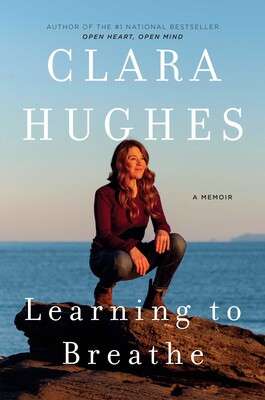
However, life took a turn when Clara hit menopause, and to deal with her debilitating–and life-threatening–symptoms, she turned to psychedelics for healing. She wrote about the experience in her new memoir Learning to Breathe and talked with us about it.
Also on today’s show, we discuss LA 2028’s newly announced slogan “Stars Align,” which, of course, comes with a film:
Plus, we wonder how that could play into the mascot for these Games. And we’ve found more cities that have agreed to host the torch relay. Is yours on the list? If you see anything happening in your city, let us know!
If you liked this story, be sure to check out these episodes:
Get more great stories in our free weekly newsletter!
TRANSCRIPT
Note: This is an uncorrected machine-generated transcript and may contain errors. Please check its accuracy against the audio. Do not quote from the transcript; use the audio as the record of note.
451-Clara Hughes on Learning to Breathe
[00:00:00]
Theme Music
Jill Jaracz: Hello, and welcome to [00:00:30] another episode of Keep the Flame Alive, the podcast for fans of the Olympics and Paralympics. If you love the games, we are the show for you. I am your host, Jill Jaracz, joined as always by my lovely co-host, Alison Brown. Alison, hello. How are you?
Alison Brown: I am feeling my stars align as we speak.
Patron of the Week
Jill Jaracz: We will get to that in a moment. Big news today from LA ’28. We will get to that in a moment. But first, we would like to thank our patron of the [00:01:00] week. That is Beth. Beth is a relatively new patron, which is really exciting. She’s joined and believes in the show enough to support it financially. So Beth, thank you so much for being a part of our patron community and for making sure our flame stays alive, too.
We appreciate you so much. And if you would like to be a patron of the week at some point, you can check out patreon.com/flamealivepod. A little later on in the show, we’ve got a, big, Patreon, exciting announcement, so [00:01:30] tune in for that.
Clara Hughes interview
Jill Jaracz: But, today we are talking with one of Canada’s most famous Olympians, Clara Hughes.
Clara has competed at six Olympics for Team Canada, earning six medals in the process. When Clara got into sports, she started as a speed skater, then found success in cycling, which was her cross-training sport. And so she first became an Olympian at Atlanta 1996, won two bronzes in road cycling. She also competed at, in cycling at Sydney 2000, [00:02:00] and after that she went back to speed skating and competed at 2002, 2006, and 2010, racking up two bronzes, a silver, and a gold in seven events.
She closed out her Olympic career back in cycling at London 2012. And you know, we didn’t read Clara’s first memoir, which I bet- Where she goes into a lot of detail about this …
because you’re just like, “Oh, she was in both winter and summer.” And then you think, like, really hard sports. Well, and I mean, they’re all hard, but
it’s kind of [00:02:30] insane how amazingly talented uh, with the ability to take on that kind of training and see that kind of success.
Alison Brown: Going back and forth is no joke.
Jill Jaracz: No joke. post-Olympics, Clara has done broadcasting, public speaking, and she wrote a memoir about her life. She’s also an avid hiker and artist.
However, life took a turn when Clara hit menopause, and to deal with her debilitating and life-threatening symptoms, she turned to psychedelics for healing. She wrote about the [00:03:00] experience in her new memoir, “Learning to Breathe,” and talked with us about it. Take a listen.
Alison Brown: Clara Hughes, thank you so much for joining us. It’s very nice to meet you.
Clara Hughes: Oh, it’s great to be with you this morning. Thank you for having me.
How Clara Hughes got into cycling
Alison Brown: So we’re gonna start at the very beginning of your career, ’cause you started as a speed skater, but then went to cycling. So let’s talk a little bit about just how that transition and how that time in your life happened, and how you ended up focusing on cycling more [00:03:30] than speed skating.
Clara Hughes: Yeah, you know, as a, a young athlete, I only skated for, gosh, it was just over a year, and I was recruited into cycling. In my hometown of Winnipeg, Manitoba, um, the Western Canada Games were in my city, and they were looking for, female endurance athletes, and kinda scouting out the other sports, some of– one of which was speed skating.
And so I literally did not know that bike racing was a sport. I had just really found out that speed skating was a sport just [00:04:00] over a year before that, so it was all really new to me, and I was open and eager. And so I had a bike for training as a speed skater, ’cause I learned pretty fast you needed that as well to train in the summer times, and went down to a training camp in the Black Hills of South Dakota.
And I guess I was good enough to make the team for Western Canada Games, and the women’s team had wild success in those games. For me, honestly, if that had been it for my athletic career, it would’ve been everything. It was such an amazing [00:04:30] experience. And I was convinced to hang up my blades for a couple of years to see what the bike, laid ahead for me, and, uh, that ended up being 10 years before I went back to the ice.
So I was sort of a speed skater, and then I became a real cyclist, and then I came back and really became a speed skater at 27 years old.
Alison Brown: So you did sort of well with your cycling.
Clara Hughes: I did all right. That was–
Alison Brown: You did all right. That wasn’t, that wasn’t a bad decision. Were you missing skating while you were [00:05:00] doing that?
Clara Hughes: The whole time. Yeah. Oh, yeah. Yeah, the whole time. I, I always held this dream that I would skate one day for Canada, and the whole time I was a cyclist, I would tell my teammates, like, “I’m gonna be a speed skater one day.” And they’re like, “You’re a bike racer,” like, “Why would you wanna do that?” And I’d be like, “Because it’s such an amazing sport.”
And it’s funny because, you know, obviously I did long track, the most boring Winter Olympic sport. Like, you start the race, you turn, you skate circles, uh, turning left, and then you don’t get in each [00:05:30] other’s way on the backstretch. It’s very polite, very civilized. It’s not short track, the roller derby on ice.
But for whatever reason, I always felt that I was meant to skate and meant to glide, and ma- meant to take those long strides. So the whole time that I was, you know, racing around the world, you know, competing in Olympic Games, and winning on all stages as a bike racer, I held onto that dream so tight that I would skate one day again.
Training differences between cycling and speed skating
Jill Jaracz: I have a question about summer versus winter training. Are the [00:06:00] pain caves different for the biking versus the speed skating?
Clara Hughes: Yeah. Yeah, they definitely are. You know, long track particularly, it’s a very solitary experience. There’s only two skaters on the ice at once, and it’s essentially is a time trial.
So it’s similar to the time trial in cycling or the, the velodrome events that I also did, the individual pursuit. But bike racing, you know, has the whole other element of road racing and the Tour de France and just, [00:06:30] like, controlled and uncontrolled chaos in the peloton that long track speed skating definitely doesn’t have.
And so you’re not just in your own effort, you’re reacting and responding and calculating everyone else’s effort, whereas skating really is this beautiful meth- methodical, like, beautiful stride and beautiful calm, I would say. Long track is a calm and cycling is a chaos because you also have a machine under you.
You know, you’re [00:07:00] propelling your machine forward, and on the blades all you have are, you know, on my feet there are 17 and a half inch blades that are, millimeters wide, and you have your body and you’re moving as one on the ice. And I think that’s one of the things that always attracted me to speed skating is that it was all about me and what I could get out of my body, and nobody else could interfere with that.
Going back to speed skating
Alison Brown: What was the reaction when you said, “I wanna go back to doing this,” after you’d had so much success in cycling? Yeah. And your [00:07:30] career was still continuing. It wasn’t like- Yeah … you weren’t, y- you were giving up on cycling.
Clara Hughes: Yeah. It was, uh, at the Sydney Olympics in Australia in 2000, and, uh, I went into those Olympics very sick with the whooping cough and finished, you know, almost in last place in the road race, and then I had a really fantastic race in the time trial.
I finished in sixth place, not too far off the podium. And all of the journalists and the media scrum were like, What happened?” Like, “How come you didn’t win another medal?” And, and I [00:08:00] was just like, “No, I don’t wanna talk about that. I, like, I wanna talk about speed skating ’cause I’m gonna be a speed skater.”
And they literally looked at me like I had lost my mind ’cause I was, you know, 27 years old. You know, there’s no going to speed skating and learning how to skate at 27. But I knew it was inside of me, and I didn’t care what anyone else thought. you know, I gave up my government funding, my carding, as an athlete.
I gave up a lot. I didn’t have to give up my professional team because they wanted to support me through the Winter Olympics that [00:08:30] hopefully I was going to make in 18 months’ time. And so I had a lot of support from bike racing, and I had an amazing coach that I started working with, Xiuli Wang, who was my coach for the whole 10 years that I skated.
And she saw that I had strengths and I had things that I could bring into the ice and into the pursuit on the ice that other athletes couldn’t. And we only had a certain amount of time before those first Salt Lake City Olympics. So she basically was like, “Go race your bike this summer. Train like a cyclist.
This is your strength. You [00:09:00] know how to suffer, and you on the bike will remind you of that.” And she said, “Just trust that we will get you good enough technically that you can unleash all of that in your races in the Olympics on the ice in the winter.” And so it was a really different path to my first Olympics.
I literally felt like I was a cyclist on the ice. I felt I had like, if there is such a thing as imposter syndrome, I had it. I was kinda like, “Do I even belong here?” And then I went and [00:09:30] won an Olympic medal because our plan worked. and I love that we thought outside of the box. I had people around me that believed in me, and I think their belief also was something that, fueled me forward.
But I literally went from being a paid professional athlete to buying my skates, to paying for ice time, paying for coaching until I made the national team. And I had to earn my way into that Team Canada skin suit, and I– that’s how I wanted it. I didn’t want anything given to me. I was like, “I’m gonna earn this, and [00:10:00] I’m gonna get that skin suit, and I’m gonna be skating for Canada.”
And in three and a half months’ time, after hitting the ice, I was doing that.
Jill Jaracz: Okay, so this is, in, in the US we have Erin Jackson-
Clara Hughes: Yeah …
Jill Jaracz: who is our big speed. And, and it sounds like a very similar story where she, but she was inline, which we learned has, uses muscles differently than speed skating on ice. Did the, the biking build your muscles in the way you needed them to use and the movement that [00:10:30] you needed to use for long track?
Clara Hughes: A little bit.
Jill Jaracz: Okay.
Clara Hughes: A little bit. It,
Jill Jaracz: um- Same deal.
Clara Hughes: Like, the crossover training was similar and, you know, with inline with Erin, obviously there’s similar technique, you know, the, the stride, the pushing to the side. But there’s a big difference in being on wheels and being on blades. what she did was amazing.
Like, learning that ice feel on the blade, you know, it’s a, it takes a special person to learn that at a later age in life. I grew up on skates. Like, I skated from [00:11:00] the time I was three or four years old. Being from, you know, the prairies, being from Canada, like pretty much everyone knows how to skate, right?
Yeah. Like my husband’s from Oregon, and he came to Canada, you know, we’ve been together 30 years, but he learned to skate in his early 40s, and he had never been on ice, and he learned to speed skate, and it was so cute watching him. But when I think of, you know, learning that, you know, even in your 20s and going on, you know, like Erin did, to win the Olympics, it’s amazing.
And for me, I think [00:11:30] because I had that blade feel and that ice feel, that real, sensitive touch on the ice, I was able to bring that in. And I think a lot of tenacity and stubbornness as a bike racer, just like knowing how to grind it out and how to fight and never give up. And re- really when that pain threshold comes, I could push through it again and again and again, and that is what served me from cycling to speed skating.
Alison Brown: So you never had those Bambi moments?
Clara Hughes: Oh, I had those Bambi [00:12:00] moments. I did. You know, my first national championship, so when I came back, I was actually trying to make the World Cup team, and I was on a national record pace in the 3,000 meters, and I fell. I tripped myself in the last corner, fell into the pads on the side, got up, started skating the wrong way, and I was just like, “I can’t believe I just blew my chance.”
And what happened was they gave me a chance to re-skate 40 minutes later, and everyone was in, at the oval in [00:12:30] Calgary was saying like, “Nobody can do this effort twice in one hour.” And I was like, “Are you kidding?” Like, “I’ve done it three times in an hour as a track cyclist.” So it was really like having that open mind coming into a sport that was really linear, that had its ways, and had things that people had done, and the way you did things.
And I just, had such an open mind from cycling and that capacity to be like, “Whatever happens, bring it on.” like, “I’m gonna attack when it gets hard and impossible.” And it allowed me to [00:13:00] skate that second race and make the team, and then, you know, ultimately make the Olympics. So I think there’s like things that complement, and they’re not always technical or physical.
They can be, the emotional, the psychological side of it, the edge that you can bring in that I think, uh, gives you something special. It certainly gave me that.
Alison Brown: What was the reception from speed skating for you coming in at that point in your career?
Clara Hughes: Yeah, I– people were curious. There was a German coach that always, like, would see me and be like, “That [00:13:30] bicycle girl.
There’s that bicycle girl.” And, you know, there was a, an American coach, Pete Mueller, at the time who was coaching a, Dutch professional team, and he had one of his top athletes watch me race once. You know, we were racing a World Cup in Norway, and he was like, “Clara, I had my skater, Urban Vinamar, watch your race because he needed to remember what it was like to suffer.”
And literally, all I was doing was, like, going out as hard as I could and hanging on for dear life with the worst technique and getting results. So [00:14:00] people definitely noticed. And I think also, you know, Europeans particularly know cycling and, and road racing, so I, I felt there was a lot of respect for me coming into the sport because of the sport that I came from.
And, I soon found my place. There was no tension, friction. it was just like I basically came into the women’s national team who, you know, as an endurance side, the Canadian women had never really hit the world stage at that highest level. And I would just came in and I was like, “Okay, we’re gonna be [00:14:30] the best in the world.”
You know, somebody’s gonna be the best, so why not us? Let’s do this. And I think I brought in that, just that desire and that, limitlessness sense of possibilities. And I’d like to think that I helped my teammates because we actually became the top endurance skating nation with Cindy Klassen, Kristina Groves, Christine Nesbitt.
All of us together were winning World Cups and world championships, you know, within a few years, and it was pretty amazing to contribute to that and to be a part of [00:15:00] that.
What it’s like to win medals in different Olympics
Alison Brown: Compare winning medals in Atlanta versus Salt Lake City- Oh … just in terms of your reaction to it.
Clara Hughes: what I will never forget is going, from the tunnel up into the infield the first race that I did in Salt Lake City, the 3,000 meters, ’cause, you know, I came from the Summer Olympics, which are so big and just enormous, you know, the scale of it, the amount of athletes, and the m- the amount of sports.
The Winter Olympics felt like this cozy little, like, [00:15:30] fireside chat compared to this stadium, you know? And so I, honestly underestimated the pressure of it because I had also been used to competing outdoors as a road cyclist. So all of that energy from the fans, from the, athletes, from the Olympics, it had somewhere to go outdoors.
And I walked up that infield, and there was an American skater skating on home ice, and she was skating a great race, and the crowd was just going wild. And I remember I walked up, and I felt like I couldn’t [00:16:00] breathe because all that energy was contained in the oval in Salt Lake City. And I was just like, “Oh my God.”
Like, I underestimated just how big this is, and it took a lot to calm myself down to be able to step on the ice. And I just remember thinking, like, “Don’t ever underestimate the power, the fuel, the energy of the Olympics.” And that set me up for my 5,000 meters, and, you know, when I finished that race, I hurt my body so badly skating that race.
It was my personal best time until the very end of my career. [00:16:30] Like, I didn’t break the time that I skated in Salt Lake City until, after I won the Olympics, after I won the world championships. It was that deep of an effort. And I remember lying there thinking I was gonna die. I was just like, “How can a person even do this to their body?”
And then as I watched the final skaters go by and realized that I had won a medal, It was such a beautiful feeling for me because as a cyclist, it was exciting, it was brilliant, it was all the things, but as a speed skater, I [00:17:00] felt like I was doing what I was meant to do. And then I was standing on the Olympic – podium with a bronze medal around my neck and looking at it and thinking in wonder and awe, like, “Dreams actually can come true, and I’m living one right now.”
So I would say the Winter Olympics for me personally just felt like this beautiful dream that unfolded, and the, the Summer Olympics just felt like this wild ride that I had been taken on, that it wasn’t even really my ride, but I had done [00:17:30] it.
Alison Brown: And then Torino- Yeah … you come away with a gold medal.
Clara Hughes: I did. I did.
And, um, again, you know, just like the Sydney Olympics, I got sick before those games with pneumonia, and I wasn’t skating my best. And I remember being in the athlete village just searching for anything that could bring me back to the feeling of being able to skate. And, you know, I was the defending world champion at that time.
I had all of these results. I legitimately was not an imposter. I was a speed [00:18:00] skater in Torino, and I expected things of myself, things were expected of me. And when I got sick, I lost so much of my confidence and actual physical capacity. And as the games went forward, you know, I had teammates winning gold, silver, bronze medals, and I felt like I couldn’t skate.
My s- coach, Julie Wong, actually had me one day go to the oval late at night and skate, like, turning right, which speed skaters never do, because she was like, “You need to, like, detach your [00:18:30] brain from this idea that you can’t skate, so let’s try skating the other way,” and it didn’t work. I was just like, “Now I really feel like I can’t skate.”
My skate technician was trying to take me, you know, he was taking me to the short track to see the short track skaters put their pressure on the ice. I was watching the Chinese team in training. Nothing that anyone could do could help me find my feel on the ice, and what changed it for me was connecting with the Right To Play programs.
Johann Olav Koss, the famous Norwegian speed skater, [00:19:00] and the Sport for Development programs that he had worldwide, they had a booth in the athletes’ village. And I started visiting that booth, and I started, you know, seeing and being reminded really of the impact of play and sport on kids.
And it brought me back to myself, remembering the kid that I was playing community sport who was so lost and getting into so much trouble, and I remembered what the lifeline of sport was. And those children, from the Right To Play programs, the videos I saw of them reminded me [00:19:30] of joy and play. And I just, you know, I realized I had a chance to do something special when I saw Joey Cheek, uh, the American speed skater, win his gold medal, and he donated his prize money to Right To Play.
And he was inspired by Johan, as I was, by the kids, by the programs. And we didn’t have prize money in Canada that time, and I remember having a conversation with my teammate about, you know, like, “Would you do that if you got prize money?” And, and I was like, “I totally would.” And I realized that I actually could.
I didn’t need someone giving me prize [00:20:00] money to try to do the same thing. And what I decided to do was give, you know, much of my savings to Right To Play when I won the Olympics, not if, but when. And I started convincing myself in a 36-hour period that I was gonna win the Olympics, and I was gonna do it for Right To Play.
I was gonna do it for something bigger than myself. And I went to the line that night knowing I was going to win. It was the most exciting race. It was, like, to the final lap. We’d just surpassed the fastest time. I was skating against the three-time [00:20:30] defending Olympic champion, Claudia Pechstein from Germany, and she had beaten me every time we had skated together, and I was like, “Tonight is the night that I win.”
I had such a greater purpose inside of me. And I will never forget throwing my blade across the line and seeing my time and knowing that it was the fastest time that day. And again, I was in a pain cave I had never experienced. I was lying with my face in the dirt on the infield. I couldn’t move a, like, a muscle in my body because everything [00:21:00] was spasming, but I knew I had won the Olympics, and I knew I had a chance to do something special, just like Joey did.
And I did that, you know. And, uh, that raised half a million dollars for these amazing programs in Canada by Canadians donating by off of my donation. And it was such a, a sense of overwhelming joy and pride and realization that success can be much more than a personal achievement. It can be something that stretches far and wide in this world and helps others.
And [00:21:30] so it’s really meaningful for me when I look back and, I have that Olympic gold medal right here, and it’s, like, all torn and shredded and like tarnished. And it’s so beautiful to look at it now because this medal holds so many stories, more than just winning.
it holds the stories of every hand that’s held it, and it holds the story of finding a way when it felt so impossible, finding inspiration, and the power of inspiration to get you [00:22:00] outside of yourself and out of your head and what you think is possible
Learning to balance the spotlight and coming down from the Games
Jill Jaracz: Were you prepared for the attention coming from being a dual medalist in both summer and winter, ’cause that hadn’t been done before in Canada.
Yeah. So you were, of course, pioneering another element of attention and media coverage. What was that like? did you know how to balance all of the, the spotlight that [00:22:30] suddenly came on you?
Clara Hughes: Yeah, you know, I did. I, I’ve been with my husband for 30 years. I met my husband Peter, after my first Olympic Games, and so I’ve always had a life outside of sport.
I’ve had interests. Peter is a long-distance hiker. When I met him, I’d never heard of the Pacific Crest Trail or the Appalachian Trail, and those are elements, along with bike touring that he brought into my life. And so every spring season, we would go and do some epic mountain traverse [00:23:00] in the US or a bike tour, and that would be my spring training for the first month.
And I think that is what helped me not only ground myself as an athlete, but it helped me get away from the spotlight that I was in, and it helped me connect back with myself in a deep way, with place, with space, with self, with adventure travel and human-powered movement. And it also allowed me to come back into the training system and feel so grateful for everything, you know, for [00:23:30] coaches, for therapists, for, you know, running water after being on, you know, the road for those months that we would do every single year.
And so I always found a way to step outside of that spotlight and, remember who I was and figure out who I was in that moment and what I was stepping into. And that was always the foundation going into Olympic seasons as well. And I would, always remember suffering on some mountain slope when I was, going through a hard training session.
And I also remembered [00:24:00] the quiet of it and, within the noise of media attention and also expectations of others, being with Peter and having the life outside of sport allowed me to be my own person and be a real person outside of the athletic performance.
Alison Brown: Things were not always easy though
Clara Hughes: No, they weren’t
Alison Brown: I- in your career, especially coming off the Olympics and that downswing when you’re coming off [00:24:30] the game.
So let’s talk a little bit about some of the not so great aspects-
of, of that for you.
Clara Hughes: Yeah, definitely. You know, I come from a difficult place, as many athletes do, and for me, sport w- has always been a lifeline my whole life, and it wasn’t, just the Olympics when they came into my life at 16, almost 17 years old.
It was community sport, community sport that got me out of the house that wasn’t safe, that, you know, was a really challenging environment that I didn’t understand as a kid. And so sport [00:25:00] had always been my lifeline, even as a teenager getting into so much trouble and, you know, I was heavy into drugs and alcohol, but I was still doing sport.
And the Olympics changed all of that for me. You know, it got me off of substance use and abuse. It got me off of smoking, of all of the things that I was doing. It got me back in school. And I actually, you know, now that I look back, , I know that, all of the delinquent activities that I did, [00:25:30] that was me trying to survive, trying to numb a lot of confusion and pain from, the home environment I came in and the– my experiences there.
And sport actually, you know, especially as a young Olympic athlete, became a different path of destruction for me. It was a way of punishing myself, especially in the sport of cycling. Like, you can never train hard enough. You can never be disciplined enough. You can never be focused enough. And so I took those things to a whole other level and literally [00:26:00] binged on the sport, and that led me to my first two Olympic medals in Atlanta.
And I also, you know, had this deep-rooted hope and desperation of belief that winning something at that level was gonna change things. And what I believed and hoped it was going to change was the feelings that I had inside of myself for myself. deep-rooted feelings of self-hatred, of never being enough, of not being good enough, of being the [00:26:30] problem, of, being this, this thing that was just so broken.
And I also believe that if I bring these home, it’s gonna help my dad who’s struggling, my sister, my mom. Like, it’s gonna fix everything, something outside of myself. And when I won those medals and I came home after my first Olympic Games, I went into my first mental health crisis of my lifetime. It wasn’t an Olympic downturn.
It wasn’t, you know, the Olympic letdown. It was serious. And I, went back into [00:27:00] substance use. I ended up quitting sport for two years. I was fortunate that I had support from my professional team and the national team through that time who saw that I was struggling even You know, when there was no conversation with mental health, they, said, like, “We wanna support you through this, whatever it takes.”
And I ended up ultimately quitting because I thought it was the pressure environment that was doing this thing to me and making me feel this way, but it wasn’t that. It was so much deep-rooted trauma [00:27:30] that lived inside of me that I didn’t know how to understand or listen to or get help for. , Ultimately, I came back to sport, and ultimately, over the years, I learned to find ways and people that could help me with that.
But honestly, it, it’s really been until my 50s until I have been able to unpack much of that. And when I look back at my athletic career, every Olympic medal I won, ev- all six of them, every performance would ultimately, [00:28:00] including my gold medal, would lead me to the same place of feeling like there was something wrong with me.
And, In some ways it, you know, it’s sad to look back , and know that and understand that, but at the same time, I look back and I see someone who found a way to survive. Like, I found the outlet of sport, and so many people helped me along the way. And now, you know, as dark as those periods were and, and the internal dialogue that happened inside of me throughout my entire athletic career and after, I realized [00:28:30] there were so many lights that lit up that darkness, that came in forms of people, of experience, of adventure, of Olympic medals, of success, of failure.
All of those things were lifelines that kept me going and helped me along the way until I could finally dig into this as an adult, as a mature woman, and realize that, you know, much of what I felt and much of that internal, ecosystem that was created was to help me survive some really challenging things and make sense of them [00:29:00] as a young person.
The treatments that saved Clara Hughes’ life
Alison Brown: In the new memoir, you talk a lot about some, you’re talking about substance, but in a different way. Yeah. You know, a lot of the treatments that you went through. Mm-hmm. So let’s, let’s talk a little bit about, that, ’cause you went a very, alternative route, if that’s the right way to, to say that, or a non-conventional route to- Yeah
to healing.
Clara Hughes: Yeah, definitely non-conventional with, the Western medical system. But, I ended up, receiving much support with psychedelic-assisted [00:29:30] therapy, which if you look historically, you know, indigenous peoples have been utilizing master plant medicines from time immemorial.
So this is nothing new. But it’s, uh, you know, it’s something that has definitely been a rocky road in Western culture and, right now the top neuroscientists in the world are writing books about the merits of psychedelic-assisted therapy. But at the same time, this is a route that I, I ended up choosing when I, hit menopause and there was just this, massive upheaval happening [00:30:00] inside of me.
I felt like I was losing my mind. It was a really terrifying time, and I ended up working with a therapist who works in somatic-based therapies and modalities, and that’s the mind-body connection. And what was so shocking to me as an athlete, because I thought I had this deep connection with my body, is I s- came to realize that my mind tried to control my body, and it was okay when my body was doing what it [00:30:30] demanded.
And, from my athletic life as an Olympian, I went on to be a long-distance hiker. I’ve hiked all the big trails in America, the Pacific Crest Trail, Continental Divide, Appalachian Trail. I was literally a hiking machine all the way through perimenopause until I injured myself in menopause, and that’s when I lost my lifeline of movement, of constant movement, moving forward, moving away.
And so when I worked with this therapist to try to, like, figure out what was going [00:31:00] on, because I literally felt like I was losing my grasp on reality and who I was, I came to realize this disconnect. And the same therapist worked in psychedelic-assisted therapy, and the route that I chose was one that was as grueling in different ways as training for an Olympics or racing with Tour de France.
It was brutal. and it was a two-year period where, I basically was having help peel back the layers, and the psychedelics were helping [00:31:30] me get into these places that were so hidden that were not remembered, and it was a pretty wild experience and very grueling, as I said. But it was also beautiful to move back into myself, into a place I had never had a chance to move into.
And, you know, when it comes to this, something like psychedelics, I’m not sitting here telling everyone they should do it. Absolutely not. It’s not for everyone, and it’s a very personal decision. But for me, it was absolutely life-changing because I came to [00:32:00] understand deeply what those voices of punishment were inside of me, and they were just a kid trying to make sense of the environment that was around her and, finding a way to survive.
And it’s been a beautiful thing to be a 54-year-old now woman and realize that I can actually have a different narrative inside of myself, and those are old beliefs and old stories that I can let go of, that I’ve always been good enough and I’m not broken. I’ve just had wounds that need attending to, and [00:32:30] that I can actually grow around those wounds and live from that growth instead of living from the wound, and it’s been an amazing experience for me.
Jill Jaracz: it sounds like the physical injury forced you then to stop and deal- Yeah … with the emotional and mental injuries-
Clara Hughes: Yeah …
Jill Jaracz: as well. And-
Clara Hughes: Absolutely …
Jill Jaracz: what was that like to just realize how broken you were inside from the family life you had?
Clara Hughes: Yeah. Yeah, you know, and, and, [00:33:00] like, I used to think that. Like, there’s just this big break, this crack inside of me.
And honestly, what I found were just some deep-rooted wounds that were inflicted at a very, very young age that needed literal tending to. And at times it was triage time. It was like, like I have to actually look after this person and that child that’s inside of me that’s still living in a state of frozen terror.
And- And I’m not [00:33:30] broken, you know? Like, there’s no break there. It’s actually just a big open wound that was waiting for, a first aid kit to come along, and that first aid kit had to come from me. And it had to come from not a place of like, just bandages and, ointments and all of that and protection.
It actually had to come from a place of love and a place of trust, and finding that I could actually build and find a place of safety inside of myself. And the reason, [00:34:00] I’d gone through my whole life striving and having to go and keep going and keep going until I was forced to stop and then finally face these things and have help facing them, is that, I was just living in a state of fear and breathing my life through this place of fear, of terror, and that’s why I had to keep going.
And the beautiful thing now is that I’m like, those wounds will never go away. People like to think that it’s just like, [00:34:30] you know, “Okay, I’m gonna do that and I’m gonna be better.” And I’ve watched documentaries on psychedelics and a lot of them present this idea that, you know, you take this psychedelic thing and you go in and then you come out and then you’re okay.
And I’ve never met anyone that it works that way for. It takes, time and patience and caring and love and connection and relational support. And for me, after receiving those things and learning to give those things to myself, I realized that wound that’s always there, as I said, [00:35:00] it’s like there’s incredible growth around it, and that growth is the capacity to actually step into and live in this world in relationship and community and with myself.
Advocating for oneself with doctors
Alison Brown: Talk a little bit about… ‘Cause there’s a very funny sce- to me it was very funny, very funny scene in the book where you’re talking to your doctor about hormone replacement therapy.
Clara Hughes: Yes.
Alison Brown: So you are this athlete who’s so in touch with her body, and you’re saying, “I need HRT,” and they’re saying, “No, you don’t.”
Clara Hughes: Yeah. [00:35:30] Yeah, really- Yeah,
Alison Brown: just-
Clara Hughes: This is, and I think, many women, depending on the care available, which for most women is underserved, under-researched, under-accessible for your women’s health specific things. Every woman, if you’re, fortunate to grow into life in a later stage, you’re going to grow into perimenopause and menopause.
And so I was just like, I learned about HRT. I didn’t know what it was, but I was like, as I was like, thought I was losing my mind, my [00:36:00] neighbor was just like, “You need HRT. It saved my life.” And, and so when I figured out what it was, I was like, “I’m gonna go get this,” because I’m, you know, I’m an athlete. I know how to, like, get things done and check off this box.
And so I went to the doctor, and literally the doctor was like, “Oh, no, no, for hot flashes and for night sweats and mood regulation, you can just take Prozac. It does the same thing.” And I was like, “But why can’t I have HRT?” like, I am literally, like, losing my mind, suicide ideation. I feel like I’m going crazy, like I’m [00:36:30] losing my grasp on things, and I can’t wear any of the clothes in my closet because I feel like I’m a walking sauna.
And HRT does all these things. Why do, why are you giving me that? And the medical system is, has a long way to catch up to women’s health needs and understand what they are. And, two doctors were really adamant on antidepressants instead of HRT. And because I’m an athlete, even in the state I was in, I was just like, “I deserve better than this.”
[00:37:00] Like, you’re treating my menopause like a mental health issue and concern. And this is like, can we just treat this as menopause and not look at just these symptoms, but look at this overall system that’s out of balance? And so I ended up pushing hard enough and had a doctor open and willing enough to say like, “This is not my area of expertise, and there’s a specialist, there’s a women’s health specialist that I can refer you, refer you to,” and he did.
And then I finally, you know, was able to go ahead and for me it was right, and it’s helped [00:37:30] tremendously to have the hormone replacement therapy. It’s not the same for all women, depending on your health history and all of that. But it also led me to realizing that this was bigger than menopause. But I was like laughing and crying at the same time when I was got the second script for antidepressants.
I’m like, “What is even happening here?” Like, there was so much I felt that was trying to come up, and I just didn’t wanna push it down anymore. So I wanted to try to get things in balance and then see where I was [00:38:00] at. And by doing that, I realized that now was the time to kinda do that deep dive in, and I was fortunate to have the support to do that.
The benefit of being older with psychedelic treatments
Jill Jaracz: How much did age help in this second round of treatments with the psychedelics? Because, sometimes the perspective of time and being older- Yeah … can, help with, what you’re going through.
Clara Hughes: Absolutely. I think that, you know, when I look back, and I’ve had people ask me, like, “Do you wish you could’ve done [00:38:30] this when you were 40 or 30 or even 20?”
And I always say no. I actually think that I wasn’t ready. I think I had to push so hard to the point of breaking, of actually breaking my knee, like injuring my knee so badly that I had that forced immobility to actually sit there and realize that now it’s time to go inward. And I think in this season of life, you know, many women come to this place of holding wisdom, holding experience, having [00:39:00] taken care of so many people in our lives and putting ourselves last for so many decades, that I think it’s a beautiful season to be in.
It has been for me. As challenging as it’s been, I also see the beauty and the perspective and the capacity in this season of life in my 50s that I have learned a sense of gentleness and patience to not just have to push through this very important thing, which is myself, and to push through the [00:39:30] layers and get to that seed of self that’s always been there that’s just been waiting to be watered.
And so I don’t know. Like, personally, I don’t think it could have happened in any other season of life, and that’s the beauty of being a woman in a woman’s body is, like, we move into so much capacity in our elder years, and which is the ridiculousness of the narrative of menopause in Western culture, that we are past our prime and that we’re to be, like, disposed of or, like, just, like, ignored and [00:40:00] pushed into the corner.
I’m like, “No, no. This is the time when we take the stage.” And I’ve seen so many women just thriving in this season of life and, you know, even an athlete like Lindsey Vonn coming back at 40, and, you know, had it not been for her crash, she probably would’ve won an Olympic gold medal, and showing that women get better with age.
All of the ultra-running events that are happening where women are breaking records of not just the women, but the men on the course, of anyone who’s ever run the course. [00:40:30] We truly get better with age, and it’s not just in the physical capacity, it’s in the emotional and spiritual capacity. And it’s not just for everyone around us, it’s also for ourselves.
How doing TV commentary changed Clara’s perspective on the Olympics
Alison Brown: One of the things that you did after your athletic career was over was you did television commentary.
Clara Hughes: Yeah.
Alison Brown: And how did that change your perspective of looking at your own career?
Clara Hughes: Yeah. It was, um… You know, I worked three different Olympic Games as a commentator and then as, in different roles, [00:41:00] and it showed me, sides of the Olympics that I didn’t know and didn’t see, that I’m glad I didn’t see as an athlete, for sure.
Like, just, the environmental impacts in many places that were just disasters, and then the political side of it as well. And as an athlete, generally, you know, you’re in a bit of a protected bubble, and many athletes push outside of that bubble, and myself included, but you still are somewhat contained, or you can’t survive in that environment.
You’ll be crushed. but, being [00:41:30] outside of it, I was just like, “Wow, this is like…” There’s a lot I didn’t like, but there was also so much beauty. I got to see more of the fan perspective, the family perspective. Literally being in the stands with family members of an athlete winning an Olympic gold medal and being a part of ex- or experiencing the contact high that the, of elation that they were experiencing in that moment was so beautiful.
And just seeing the awe of the spectacle [00:42:00] from a much broader perspective, and honestly, for myself personally, I was like, “I can’t believe I used to do that.” Like, that’s pretty stressful. And it’s amazing, you know, what you can do when you’re focused and when you have the right people around you helping you, lift you up so it doesn’t overwhelm you.
But I, I was in a, also a little bit of a state of awe that I was able to do that time and time again and, uh, not succumb to the pressure and, see and feel the pressure as, [00:42:30] fuel ultimately on that ultimate stage.
Jill Jaracz: Have you seen any changes in the elements that you did not like from the commentary days?
Clara Hughes: No, I haven’t. Honest- honestly, I haven’t. it– I think more and more is being exposed of the Olympic movement, that is definitely its shadow side, its dark side that’s always been there. But the things that I’ve seen changed, particularly in my summer sport, in road cycling, it’s been amazing to watch that sport because when I was a [00:43:00] cyclist, like, yeah, we were professional, we made prize money and all that, but the top women now in road cycling are making over a million euro a year in prize money.
There’s a minimum wage in that sport. There’s a true women’s Tour de France that millions of people watch. And so just seeing not only in my sport, but women’s sport in general, seeing women’s sport take the stage on their own, standing on their own, is in the beautiful, you know, spectacle [00:43:30] that it is of athleticism, of personality, of, of spirit, has been beautiful to watch.
And that’s not just in the Olympics, That’s in all the tennis matches, that’s in the women’s Tour de France, that’s in athletics, it’s in rugby, it’s in all of these sports that showcase not just one kind of woman, but all shapes and sizes of women being so excellent and being amazing and inspiring, and actually being given the TV time and [00:44:00] attention and respect that they deserve.
So that has been the most beautiful thing I have seen change, and I hope to see– I n- I don’t hope, I know we’re all going to see it continue to change. And, women’s sports is amazing. I mean, it’s so fun to watch, and people are just realizing like, “Ha, wow,” like they don’t need to be anything like the male version of this sport.
They hold their own.
Changes in awareness of athletes’ transitions from sports
Jill Jaracz: One of the other things that’s changed a bit is the attention to athletes once they retire from their [00:44:30] sporting career, and also providing more mental health resources, and that- Yeah … that’s come to the forefront a little bit more. what have you seen or what have you wished that you had had back in the day?
Clara Hughes: Yeah, you know, with the Canadian Olympic Committee, they have, Game Plan, and they have a whole program for athletes, not just after sport, but during sport, if they’re struggling, that goes beyond the sports psychologist, and it’s real-time funding that is, you know, allows athletes to access proper [00:45:00] support.
That was not there when I was an athlete. All of the things that I sought out were out of my own pocket, but what I did receive after sport was three years of support with a psychologist that I utilized, and I continued to utilize when that was over, out of my own pocketbook. And so I’ve seen greater conversation, openness with athletes about their own mental health journeys.
You know, athletes like Simone, Simone Biles, Michael Phelps, you know, so– Naomi [00:45:30] Osaka, so many athletes, they’re opening up about their own mental health struggles and concerns, some of them on the playing field, like Simone Biles stepping away from the last apparatus in the Tokyo Olympics saying, “I need to protect my mental health.
Like, I just actually safely cannot do this right now,” said so much to the world about what a workplace could be, you know? And I think sport is showing, in some ways, the beginnings of what that place can be for people. And [00:46:00] sport influences life, influences business, influences everything, and I think from what I’ve seen with my own Olympic committee, they’re doing so many things right.
And so, uh, yeah, I wish I had all of that support as an athlete because I think someone would’ve noticed, you know, the way I was going about sport wasn’t just this great capacity, but was trauma-driven, and that trauma needed support. but at the same time, you know, I’m grateful that I did find my own way.
I’m really, really relieved and [00:46:30] happy to see athletes don’t actually have to struggle the way that I did anymore, and there are people noticing things and accessing support for them and helping them on their journeys of, mental health and wellbeing.
On writing Learning to Breathe
Alison Brown: This book is very vulnerable-
Clara Hughes: Yeah …
Alison Brown: and very open, so that’s, that is impressive.
And why did you wanna write it?
Clara Hughes: I did not ever want to write another memoir. I wrote a memoir 11 years ago called “Open Heart, Open Mind,” and, and it was about, you know, my journey, not just in sport, but in life [00:47:00] and, you know, my mental health journey. But then menopause hit. And like I, as, as I’ve spoken about, it’s in one word, it was because of menopause.
That experience that I was having and the subsequent experience afterwards, I just felt like there was something to share because I felt like, and I feel like if I’ve gone through this and it’s been such a struggle with the system, and then also this incredible opportunity in this season of life of unpacking things that I carried that I remembered and didn’t [00:47:30] remember, but this, possibility for transformation and change at any age, I was like, I think that there are women out there that might relate to this.
And I believe in the power of story. When we share our stories, we connect as people. we can find out we have more in common than we do in difference, and I believe that we connect at the deepest level through story. And so I really felt like if I open up about this in an honest way, in my own authentic way, that maybe someone can open up themselves, [00:48:00] to someone close to them or to themself and see that life can be very different and change is possible.
So it’s just, you know, a hope that it’s a bit of a catalyst for people, because I know I’m not the only woman experiencing these things in this time of life.
Jill Jaracz: Did you write the book as you went along through treatment, or did you- Yeah … was it as a reflection back?
Clara Hughes: Yeah, it was, you know, an almost real-time reflection back.
I’m a big writer and I’m a [00:48:30] painter. I use visual arts for a lot of my expression, so I was, you know, outputting a lot in this time because it’s my way of kind of like seeing and sorting things out is getting them on paper in whatever form. And so I had the help of an amazing writer to put all these things into the form of a book and to kind of hone it down to story and a storyline and the arc of story.
But it was really, you know, almost real time, which was a wild experience. there were [00:49:00] times when I was just like, “Is this a really good idea to be writing about this?” But at the same time, I was like, “No, it’s actually a real experience, and it’s raw and it’s uncut,” and that’s how I wanted it to be because it kind of feels like that’s what menopause is.
It’s a raw, uncut experience in life that is unlike any other, and everything is just so vividly alive and real and just like coming out. And so that’s how I [00:49:30] hoped that this book was gonna be with some humor along the way, so I’m glad you saw the humor in it. because I think, you know, it can be incredibly grueling and challenging and hilarious all at once.
That’s kind of how life is if you’re able to see it that way, and I think laughter is some of the best medicine that can get us through the toughest times.
Jill Jaracz: you also have, gigs as a public speaker. Yeah. So what is it like, and going through treatments, having your work as a public speaker, and [00:50:00] also being tapped, especially I thought about this, for during Milano Cortina 2026, you’re working on the ends of this book, and you’re getting tapped to give your perspective, and you know this book is coming out.
what did you share along the way publicly before unleashing the story out into the world?
Clara Hughes: Yeah. You know, it’s really just the wisdom and the insights that I’ve had along the way. They’re not specific stories, but, the whole idea that I used to believe I was broken, and now I know I never was, you know, [00:50:30] and that we grow around the wound, and capacity comes out of that growth.
Like, all of these things that I know are true, and the old stories and beliefs that I’ve let go of, they come into my story, storytelling. you know, like I’m a public speaker, but I’m not someone that comes in and talks about this expert or that person that did this thing. It’s really been my experience that I share through story, and the people that have come into my life and, taught me so much, been my great teachers, like my coaches and some of my [00:51:00] therapists, and my husband Peter, like people that are in my life that have given me these great lessons that I have applied to life.
Like, those are the things that I bring in. So, there’s just been little nuances that have come in and touched my storylines and the, woven stories that I share. And that’s going to continue to change, because I’m not a static person. I’m not stagnant. I’m ever-changing, ever-growing, ever inspired, and super curious and creative.
So [00:51:30] that’s my approach to storytelling, and these things will continue to come in. And it depends on the client, Everybody has a different want and need. Every audience is different. And so I take a lot of time with my clients in asking, you know, why they hired me, what they’re hoping for, what they expect, and then weave a story to be in line with that, bringing myself.
Hikes on Clara Hughes’ list
Jill Jaracz: What hikes are left that you wanna conquer?
Clara Hughes: Oh, thank you for asking. No one ever asks me about hiking. And it’s pretty much all I wanna talk [00:52:00] about ’cause I love it so much
Jill Jaracz: I mean, I love the trail name you got, from hiking, some of the trails and, uh- Yeah, Red
Clara Hughes: Feather.
Jill Jaracz: You know, Red– Yeah.
From- Yeah, my red
Clara Hughes: hair.
Jill Jaracz: Yeah. and how appropriate that was, and, it’s so interesting to talk with long-distance hikers, and it’s the endurance and also, the ability to be alone for so long and- Mm … and open yourself up to the world around you in [00:52:30] a way. Yeah. And be still.
But what, what hikes are out there that you still wanna do?
Clara Hughes: Well, I’ve pretty much hiked most everything, and a few of them I’ve hiked them over a few times. But I do– I’ve hiked the Pacific Crest Trail one and a half times, and, I would love to finish it, complete it the second time.
And so I have Oregon and Washington left to hike to complete it for the second time in my life. And so I would love to cherry-pick Oregon in the season when [00:53:00] there are no mosquitoes. And, uh, that would be late summer. And then I would love to cherry-pick Washington, because when I south bounded the PCT, I went from Canada to Mexico, it took me 19 days to hike Washington, and it rained 18 of those days.
So I wanna go back in the fall. My husband Peter, who hiked, you know, the PCT in 1993, way back when, he always waxes so beautifully about hiking, hiking [00:53:30] Washington with the elk bugling and all the larch trees turning and just the beauty of the land. And I’m like, “I’m gonna hike Washington in the fall.
I’m gonna hear those damn elk bugling.” “And there’s gonna be some sunshine, at least for more than one day, because I wanna see it. I wanna see the volcanoes and the North Cascades, and I wanna move through the land in a different way in this body right now, how it can move.” And so, and I also just like, God, it’s just there’s something [00:54:00] about that trail that always draws me back, so I’d, I’d love to complete it for a second time.
Mm-hmm.
Jill Jaracz: any other non-US trails that you’re interested in?
Clara Hughes: Yeah. You know, there’s, uh, quite a few trails on Vancouver Island where I live up here in the Pacific Northwest, and I’ve hiked most of them. I’ve hiked the length of this island. so in Canada, we don’t have a national trail system.
The, it’s very different in Canada. So there’s trails in national parks, but there’s not really the National Scenic Trails Act [00:54:30] is what it’s called in the States. So there isn’t, like, the funding and infrastructure behind many of the trails for them to be established. So pretty much that’s why the world comes to America to hike, ’cause you guys have amazing trails that you can just go on and hike.
I was back in the Eastern Sierra Nevada of California, last month at a place I used to live, and, you know, the John Muir Trail is there. I’ve hiked it a bunch of times. But one of the trails and routes, it’s more a route than a trail I’ve always dreamed of doing, is the High Sierra [00:55:00] Trail. And so I would love to get back into the high country there and be in that beautiful land and see it in a different way.
but as far as Canada goes, I’ll probably repeat the North Coast Trail here on the island, the West Coast Trail. I’ll go back and do the Nootka Island Trail, and then some obscure tr- hikes in Strathcona Park, on the island where I live. they are definitely places I’ll go back and do again.
Jill Jaracz: Excellent.
Clara Hughes: Thank you so much, both of you. Hey, that was really fun.
Alison Brown: Well, thank you so much for spending some [00:55:30] time with us today.
Clara Hughes: Yeah.
Jill Jaracz: Thank you so much, Clara. You can find Clara on Instagram, and we’ll have a link to her book in the show notes. But if you would like to get your own copy for free, we are going to do a giveaway, and we are going to give, uh, a copy of “Learning to Breathe” to someone in our Patreon group. Now, you do not have to be a paying member in order to be in Patreon.
There is a free level, and we have many, many free patrons. so, sign up there, [00:56:00] patreon.com/flamealivepod.
Uh, if you sign up by November 30th, everyone on Patreon at that point will be put into a random drawing for the copy of the book. Very exciting. It’s a good read. It’s a quick read.
Alison Brown: It’s a very nice read. We’ve, we’ve read some bad books.
Jill Jaracz: We have read some bad books.
Alison Brown: And this is- Yes … not one of them. This was a very- No
this was a nice read.
Jill Jaracz: And, and what I liked about it is that it really makes you think and challenge some conventional thinking. [00:56:30]
Alison Brown: Yes.
Jill Jaracz: That, that I really appreciated from this, and it was a very accessible book, I thought, in doing so. So if you want to be on the giveaway again, again, sign up for Patreon starting at the free level, patreon.com/flamealivepod by November 30th.
LA 2028 slogan announced
Alison Brown: Stars align.
Jill Jaracz: Yes. Stars do align at LA 2028. We have an official slogan [00:57:00] that just got announced today as right before we taped. Again, that is
Alison Brown: stars align.
And you have to say it that way. You have to say it that way. I mean, you can’t have a slogan like stars align and just be like, “Stars align.”
No. You have to get that tone in your voice as if you’re imagining the stars aligning.
So And I’m sighing because the press release was really rough. Once you parsed it down, like, it is, quote, [00:57:30] “Both a rallying cry and an invitation for athletes to compete on the sport’s biggest stage, volunteers to lend a hand, and supporters everywhere to cheer them on,” period.
So the stars align when dedication meets a generational moment. they did not– ’cause immediately what I thought of was, oh, there’s gonna be a lot of celebrities there.
Well, there will be.
Jill Jaracz: Yeah.
Alison Brown: No doubt. So- I mean, we had celebrities in Paris. We had American- Yes … celebrities in Paris, so, uh, in LA, forget [00:58:00] about it.
It’s gonna be jam-packed.
Jill Jaracz: Yes, so that’s where my brain went immediately on stars align, and then it was like, oh, I get back to, oh, the stars are aligning for you to have a good event and, you know, be at the Olympics at the biggest sporting event in the world, blah, blah, blah. So also from the– oh, oh, the quote attributed to LA ’28 chairperson and president Casey Wasserman says, ” Los Angeles is a place where dreams take flight and the Olympics show us what’s possible when the world [00:58:30] unites.
Stars align is a call to action, whether you’re an athlete at the peak of your skill, a volunteer welcoming the world to these games, or a fan cheering passionately from the stands. We can’t wait for the stars to align in 2028 so we can share this moment with everyone.”
Alison Brown: And I can almost guarantee you Casey Wasserman never said that.
Jill Jaracz: Gosh. nobody said that really. It just looks good on print, from a PR standpoint. [00:59:00] Oh my gosh. Like, just hard eye roll on that. did you watch the, fun, high energy film powered by the Red Hot Chili Peppers, Iconic Hits: Can’t Stop?
Alison Brown: I thought it was a very high energy can’t
Jill Jaracz: stop kind of video.
Can’t stop, won’t stop. That’s LA ’28. That’s, that’s really what the slogan should be. Can’t stop, won’t stop.
Alison Brown: Can’t stop, won’t stop.
Jill Jaracz: Yeah, definitely. But it, I mean, it’s what you would expect from a high energy film about sports, is clips of sports [00:59:30] at the Olympics. Although I didn’t like the end, ‘ cause the end ends on Steph Curry doing the little night night thing.
Alison Brown: Yeah, and that’s night night is not like how you wanna think of it ending. You wanna think of it ending in a high energy can’t stop moment.
Jill Jaracz: Right, and that was kind of a diss.
Alison Brown: That’s very true.
Jill Jaracz: So didn’t love that, but was high energy. Stars are aligning. Stars are aligning.
Alison Brown: There you go. See, now you’re getting the tone.
Oh,
Jill Jaracz: I’m getting [01:00:00] the feel. Woo.
We speculate on the LA 28 mascots
Alison Brown: Well, a long time ago somebody asked us to guess what the mascot was gonna be for LA.
And I said, “Oh, they seem to be leaning into this beachy thing, so maybe they’ll have a starfish and a seahorse.” I kinda had the thought about the starfish and the stars align.
Like wow, I was thinking in the stars. So maybe they will have a starfish.
Jill Jaracz: Interesting.
Alison Brown: I would be so excited if they had a [01:00:30] seahorse and a starfish.
Jill Jaracz: that would be cool. That would be cool.
Alison Brown: And- That would be fun. It would be really hard for the starfish to walk. Dude,
Jill Jaracz: has, it hasn’t stopped a hat, let me tell you.
Alison Brown: Wait, the seahorse as well. The seahorse would kind of have to hop
Jill Jaracz: around. Yes. But- But- … didn’t we have a seahorse for, like, the Athens Paralympic Games?
Alison Brown: I don’t know what was we had for the Athens Games. Those were like the magical foot.
Jill Jaracz: But [01:01:00] those were the blobs were the Olympics I’m looking this up.
Yes. I remember this when we did mascot, madness.
Alison Brown: Oh, yes
Jill Jaracz: Remember how adorable that was?
Alison Brown: Yes, I had forgotten the seahorse with the funny face.
Jill Jaracz: Yeah. So that would be a bummer if you repeated an animal. Although you kinda… Wait, so scratch that because Midori was a tiger.
Alison Brown: And
Jill Jaracz: might be another tiger. And SooHorang was a tiger, but they were different kinds of [01:01:30] tigers.
Maybe if you had a, seahorse that wasn’t orange, reddish, blue-green, yellow.
Alison Brown: Well, I’m still s- I’m still going with my starfish. I’m still sticking with it-
Jill Jaracz: Okay …
Alison Brown: as, as the possible Olympic mascot.
Jill Jaracz: I would not be against that. I think that would be cool. That would be really cool.
Comparing Stars Align to other Olympic slogans
Jill Jaracz: Okay, so when we look at Stars Align, compare it to the last several games.
So Milano Cortina was It’s Your Vibe. [01:02:00] Paris 2024, Games Wide Open. Beijing, Together for a Shared Future, which I know it says shared, but because they said shared in the the song, I can’t think of it as anything but Together for a Shared Future. cause we heard that all the time when we were- We did … at Beijing.
We heard it all the time. Unlike the
Alison Brown: song from Milan, which we heard once and
Jill Jaracz: never again. Once. I know. Oh, [01:02:30] Milano. and then Tokyo was United by Emotion. So they’re all- I think
Alison Brown: stars align kind of works in this
Jill Jaracz: Yeah, in this pantheon of, kind of bland slogans.
LA 2028 Torch Relay: More cities to add to the route
Jill Jaracz: All right. torch relay update. So excited about this. This has become your pet project. Oh my gosh. You are so enjoying doing this. Aw. And well, and I more enjoy yelling at AI and telling it it’s being lazy ’cause it’ll be like, “Well, this wasn’t an [01:03:00] exhaustive search.” I told you to search. Why are you being lazy?
And today I told ChatGPT, “I’m gonna use Claude,” and he’s like, “Well, I’m sorry I couldn’t help you.”
Alison Brown: You know, you’re going back in our lives because we were librarians at one point in our lives- Yes … and people would come, and sometimes they would ask more than one of us to work on a project, almost like- Mm-hmm … we were competing-
Jill Jaracz: Oh, right, right. Yes … to
Alison Brown: see who would get the better level of information back to our, people.
So I feel like you’re [01:03:30] kinda setting this up with your AI assistants. Yes. Who’s gonna do the better job?
Jill Jaracz: I am, and sometimes they find different things, so you know, it doesn’t hurt to try more than one database, so to speak. brand new, Manchester, New Hampshire, a mere three to three and a half hours from where you live.
Alison Brown: Okay. now I do not have a source for this, but I did come across a little factoid that my area, my corridor, is the single most congested corridor in the [01:04:00] entire country. So when I say I have traffic like nobody else, I am not kidding. So three and a half hours is what it says when you do a map search, but in reality, getting to Manchester, New Hampshire, ‘ cause you gotta go around one of the ring roads of Boston, that’s a long time.
Jill Jaracz: We’ll see. We’ll, you know-
Alison Brown: We’ll see who
Jill Jaracz: comes closer … but you could go up, can you go up Hartford and go up Western Mass and cut over?
Alison Brown: You, you can, but it’s tricky.
Jill Jaracz: Okay. But,
Alison Brown: [01:04:30] you know- Not that that does you any better, ’cause then you gotta go through Hartford.
Jill Jaracz: so Manchester voted on this one, yes. , New Orleans, potential. this was on their September 17th, 2026 agenda, trying to confirm whether or not it’s been passed. we can add San Jose to the p- potential list, San Jose, California. This will be on its November 3rd, 2026 agenda.
Thank you listener Jason for letting us know about this. [01:05:00] And, Minneapolis got confirmed. It totally passed it. Cleveland still in committee. Okay. So we are now up to like 20 cities, so I’m, I’m very impressed. And we have, I do have a spreadsheet.
Alison Brown: Of course you do
Jill Jaracz: 15 potential states. Okay. So we are over 20% of the way there. Not bad. we’re going to put the full list on our website soon. We’re going to start running a series on social, so we’re @FlameAlivePod, Facebook, Instagram, [01:05:30] YouTube, X. We’re still on X. You’re giving me a look.
Alison Brown: ‘ Cause of course we’re gonna have a running series. This may in fact be the telenovela of-
Jill Jaracz: Right …
Alison Brown: of, of LA. Yes. We have not had yet a telenovela, so this may be, I’m not even sure what to call it. Relay novella?
Jill Jaracz: Maybe. Maybe. But we’ll get there. I’m excited.
Alison Brown: Um- Yeah, if you hear things locally, [01:06:00] please let us know if it comes across your city- Just like-
that your city is considering it. We absolutely wanna hear from not just ChatGPT trying to find this.
Jill Jaracz: Right, and they– And just like the listener Jason did, sent it to us, because that helps us focus and, and when the AI, ’cause I’m using multiples, different versions of AI. When they don’t do the search right or don’t get it it, it helps to have the link because I do have to double-check AI for everything that it pops back for [01:06:30] me.
and that’s why some stuff is still kind of provisional because I haven’t figured out if it’s really gone through the entire system of, city government yet. But, uh, yeah, it really helps us be able to focus on where things could go. But yeah, if you hear of a torch relay city potential or if you hear about, organizing it or you hear about how, runners will be selected in that city, let us know.
We’d like to hear from you, flamealivepod@gmail.com. [01:07:00] Oh, it’s so exciting. So exciting.
Allianz invests in LA28 stadium naming rights
Jill Jaracz: Allianz is the latest Olympic and Paralympic partner to get in on stadium naming rights for LA ’28. As you may know, this is a brand-new feature of an Olympic Games. The first time ever. LA will be the first Olympic host ever to have, naming rights for stadiums and, you know, encroaching in on field of play [01:07:30] advertising.
And we know that the Paralympics already allow field of play advertising. Allianz is a top sponsor and they also sponsor the Paralympics. They will be sponsoring the Allianz Beach Arena that will host beach volleyball during the Olympics and blind football during the Paralympics, and that will be in Long Beach, California, so look out for that. do you think they’re gonna get all the stadium na- rights named? Yeah. Or just some of them?
Alison Brown: I think just some.
Jill Jaracz: Okay.
Alison Brown: They may be trying for all, [01:08:00] but I don’t think it’s gonna quite make it.
Jill Jaracz: But, if they pay for stadium naming rights on top of whatever sponsorship, I mean, it’s paying for the games because unlike LA ’84, which made money, they made their money on broadcasting because the IOC didn’t run broadcasting at that time.
Alison Brown: Right.
Jill Jaracz: So now you gotta have a different way to make your money.
Alison Brown: This does not bother me in terms of- No … encroaching on field of play, because I’m not gonna see it as- Right … I’m sitting there watching the, games. And it [01:08:30] makes so much sense that SoFi Stadium should still be SoFi Stadium.
Right. It made it very confusing, I think, for some people in Paris especially. I remember this being an issue, where buildings that had names suddenly didn’t have names.
Jill Jaracz: Right, and you had to figure out where on the map they were because- Yes … suddenly they weren’t what they were supposed to be, and you didn’t know what the original name was because, of course, the Olympics and the, the games covered it up online as well, and it was trying to figure out, “Well, this [01:09:00] is what we mean, and this is where to go to.”
Hard eye
Alison Brown: roll. So if a stadium has a name, it should have a name.
Jill Jaracz: Yes. So we’ll see what, what else they come up with, because it is a way to make money, and these games are more and more expensive every time they get put on. So, not surprised.
Will we ever see advertising on the field of play at the Olympics?
Jill Jaracz: Do you think at any point in the future we will start seeing a not clean field of play at an Olympics?
Alison Brown: Oh, I think we’re gonna con- constantly see [01:09:30] this inching in, like where we saw the, Purell and the puffs.
Jill Jaracz: Oh, right. Right. We s- yeah, on the sidelines.
Alison Brown: On the sidelines. I think we’re gonna see a lot of that. But actual emblems right on the field, I think they’re gonna fight that tooth and nail. Okay. I think we’re gonna do a lot of this edging in, edging in, and then we’re probably gonna have a swing the opposite direction.
Jill Jaracz: Kind of like they did in 1924, which had stadium advertising and then they went, [01:10:00] “No.” No. and it’s hard because I get the idea of making money, but I also like that clean field to play for just two weeks. Right. You know what I mean? Like, it’s nice. It’s really nice. all right.
We have some news about the Youth Olympic Games. The Dakar 2026 Youth Olympic Games will be starting this Saturday, October 31st. the [01:10:30] games is gonna have 2,700 athletes, which is not as big as a Winter Olympics. 153 events across 25 sports. So it is big.
Alison Brown: I mean, that’s no joke.
Jill Jaracz: Yeah. I mean, it’s almost as many sports as a, an Olympics has.
Alison Brown: Yeah.
Jill Jaracz: last week we had a larger list of broadcasters airing the games, but they’ll also be streamed on olympics.com and the Olympic Channel online. hopefully we can see them.
Alison Brown: We’re gonna keep our fingers crossed [01:11:00] that olympics.com really comes through with its streaming. and we can get our eyeballs on Dakar.
Yes. So we will be chatting about them in our Facebook group. That’s Keep the Flame Alive podcast, and we will do a recap show after they’re over. Um, some big Olympic stars have come out of the Youth Olympic Games, so let’s see if anyone catches our eye as someone we’ll see in the future. All right, that is going to do it for this episode.
Do not forget to sign up for Patreon at every, any level, including free, to get into our drawing [01:11:30] for Claire Hughes’ book, “Learning to Breathe” by November 30th. That’s patreon.com/flamealivepod, and we will be back next week. You know who’s coming
We’re having, an old friend of the show comes back on next week.
Could be Shuckla-san citizen number one.
Jill Jaracz: Very excited about that. See a member of Team Keep the Flame Alive come back and chat with us, so be sure to tune in for that. Thank you so much for listening. And until next time, keep the flame [01:12:00] alive.